There's a bit of a discussion in the comments to the next post down about why GM failed. Since that's what I'm studying (except not GM, I'm just studying generally why some firms outperform other firms), I probably ought to have an opinion. And I do.
It was management's fault. It's always management's fault. It's in the job description. But that's not a particularly satisfying or interesting answer.
I'm not sure why GM died, but there's one explanation (or rather one set of explanations) that's worth looking at. I think that it's fair to say that most strategic management scholars (and I) think that strategy matters. That organizations can effect their own performance by choosing strategies that fit their environment. The sub-field I'm working in, strategy process, is the study of how organizations monitor their environment, move information to the places in the organization best able to act upon it, and then develop strategies to fit the current environment. This side of strategy assumes strategic choice.
But there is a another side of strategy called, not entirely appropriately, determinism. These theories basically assume that strategy doesn't make a difference; that individual organizations don't really have much control over their own performance. Michael Porter, who some of you have probably heard of, started strategy by more or less teaching that what industry a business is in makes all the difference -- all companies can do to help performance is choose the right industry and then work with their competitors to shape the industry by, for example, getting the government to restrict entry. Other scholars think that organizations are subject to the laws of population ecology; or that corporate routines are like genes, immutable in the organization but mutable as new organizations are created. Other scholars think that young organizations can be entrepreneurial, but then bounded rationality, risk and loss aversion, satisficing, etc., embed the existing strategy which cannot thereafter by changed. My off-the-cuff reaction is that this last description fits GM.
Miles and Snow (1978) -- a great book I recommend to lay business people and Harry -- divides up corporate functions between the entrepreneurial, the engineering and the administrative. Different companies emphasize different functions, and the result is four types of companies: prospectors, analyzers, defenders and reactors. Any of the first three can be fine, depending on the environment. Being a reactor is fatal. GM was founded to concentrate on the administrative function. Toyota and Honda focus on the engineering function, with some attention paid to the entrepreneurial function. GM never could shake its focus on the administrative function; they always thought that they could manage themselves out of the predicament. Over time, they slid from analyzer to defender to reactor, and then they died. This makes it sound as if GM could have saved itself if it had become entrepreneurial, or if its unions had allowed it some engineering slack. But GM was what it was. There's no sense telling the lobster that it could save itself from the pot if it would only sprout wings.
Of course, that suggests that the government bailout was exactly the wrong thing to do.
01 October 2009


15 September 2009
What Is To Be Done?
Even knowing that I sometimes work with long lead times, I'm somewhat embarrassed to admit that I'm still toying with a thought I first had about fifteen years ago. When Hillary Clinton was pushing for national health insurance -- and how times change -- she was asked about the effect compulsory health insurance for employees would have on employers. Her response was something to the effect of "Why should I worry about the fate of undercapitalized businesses."
I was struck then, and have been struck repeatedly since then, by the relationship (I would even say co-dependence) of big government and big business. Big government needs big business, because big businesses are a nice pot of assets that can be coopted for the purposes of big government without having to use the "t" word. Big business likes big government because (a) in a world where only big businesses can afford the cost of regulation only big businesses survive and (b) big government will be a big client.
Mix in some Olsen (Theory of Collective Action) and some Stigler (Regulatory Capture) and, hey presto, you've got the corporatist state not through right-wing fascism but as the most likely path from where we are (or were 20 years ago) to lefty nirvana.
It strikes me that there is some meaning to all this, and something should be done about it, but after 15 years, I'm just not sure what.
I was struck then, and have been struck repeatedly since then, by the relationship (I would even say co-dependence) of big government and big business. Big government needs big business, because big businesses are a nice pot of assets that can be coopted for the purposes of big government without having to use the "t" word. Big business likes big government because (a) in a world where only big businesses can afford the cost of regulation only big businesses survive and (b) big government will be a big client.
Mix in some Olsen (Theory of Collective Action) and some Stigler (Regulatory Capture) and, hey presto, you've got the corporatist state not through right-wing fascism but as the most likely path from where we are (or were 20 years ago) to lefty nirvana.
It strikes me that there is some meaning to all this, and something should be done about it, but after 15 years, I'm just not sure what.
A Nice Illustration Of An Odd Rule Of Evidence
From a comment at Firedoglake:
But the fact that they decide that the witness is lying about a particular point is not evidence of the opposite. The usual example given is a trial in which whether it was raining at a particular time is important. If one party testifies that it was not raining, the jury can disbelieve him. But that is not evidence that it was raining; the other side still needs to enter its own evidence on that point, which the jury -- again -- can believe or disbelieve.
I think, though, that the comment illustrates a better example. We are free to disbelieve Joe Wilson's statement that his outburst was spontaneous. But that disbelief is not evidence of a plan to embarrass the president.
How about when Wilson was asked about the outburst one of the first things out of his miserable pie hole was, “It was totally spontaneous.” He was never asked if it was planned or spontaneous; he volunteered that information right off the bat. That’s what made me first believe it was all planned. And who better to do it than a piece of work like Wilson?One of the important rolls played by a jury at trial is to disbelieve evidence. The jury is supposed to watch the witnesses and, using their common sense and everyday experience, decide whether or not the witness is telling the truth. If they decide that the witness is lying, they can disregard that testimony.
But the fact that they decide that the witness is lying about a particular point is not evidence of the opposite. The usual example given is a trial in which whether it was raining at a particular time is important. If one party testifies that it was not raining, the jury can disbelieve him. But that is not evidence that it was raining; the other side still needs to enter its own evidence on that point, which the jury -- again -- can believe or disbelieve.
I think, though, that the comment illustrates a better example. We are free to disbelieve Joe Wilson's statement that his outburst was spontaneous. But that disbelief is not evidence of a plan to embarrass the president.
10 September 2009
Doh! Spoke Too Soon.
Apparently, I wasn't quite correct to concede, below, that the uninsured exist. After all, Barack Obama wiped 15 million uninsured off the map last night.
04 September 2009
US Health Insurance Myths
As we go along debating health insurance reform, I am constantly amazed by the myths people believe about US health insurance. As I run across these myths, I'll try to note them here.
1. Preexisting conditions: People seem to think that this limitation is some sort of trick. Instead, it is a fundamental part of insurance. You can't insure your car after the accident or your life after you die. But so long as you have insurance, a preexisting condition does not stop you from changing your insurance. You cannot get trapped in a job and you can't lose your insurance because your employer changes plans; so long as you have insurance, you can't be excluded from a new group plan. Under federal law (lots of states have more generous laws), preexisting condition exclusions only apply if you have been uninsured for at least 63 days, apply only to conditions for which you have sought treatment and only allow a look-back of one year. A nice primer on preexisting conditions and federal law is here.
2. What we have is "insurance": As implied above, insurance policies are basically bets we make against catastrophe. I bet that my house will burn down, the insurance company bets that it won't. I bet that I'm going to die in the next year, the insurance company bets that I won't. I bet that my car is going to get stolen, the insurance company bets that it won't. If I lose the bet, there I am with my life, my house and my car. If my car explodes when I plow into my house, my wife and kids have a big pot of money to sit up at family dinners and call "Daddy."
There are things I can do to adjust my odds in these bets. I can get an alarm for my car and garage it in Northampton Massachusetts rather than the Bronx. I can get an alarm for my house. I can stop smoking and flying airplanes. For each of these, my premiums go down. But note that I the insurance company doesn't take my higher premium and then pay for alarms. Because that would be nuts.
But my health insurance pays for costs that are entirely predictable. It pays towards my annual physical. It pays towards medicine for chronic conditions that are very common among men my age. There's no sense betting on my having an annual physical, so why am I insured against it? I'm sure that all of you know the answer, but note that, when it comes to paying for relatively small, foreseeable expenses, all of the carping about wasteful spending is entirely correct. It makes no sense for me to pay my employer (think about it) to pay the health insurer to pay my doctor for an annual physical. I should just pay for it directly.
3. People are dying because they don't have health insurance: OK, that's not exactly a myth, but the general conception of how people are dying from lack of insurance is wrong. People with acute conditions -- heart attacks, trauma, etc. -- don't die from lack of insurance. They get treatment regardless of insurance. Someone falls down clutching their chest, you call the ambulance, the paramedics start treatment and get him to an emergency room and they get to a hospital bed before anyone even starts to try to figure out if they have insurance. Outcomes from acute treatment are pretty much invariant by income status.
People die -- more exactly, their life-span is shortened -- because of chronic conditions. High blood pressure isn't treated, cancers aren't caught as early, high cholesterol isn't treated, diabetes isn't caught as early, etc. This is what people mean when they say that we substitute treatment for prevention.
The problem here is that "prevention" is of questionable value and is incredibly expensive. For every heart attack delayed (and delay is basically all that can be accomplished) by blood pressure or cholesterol drugs, a large number of potential victims have to be treated. It is that "unnecessary" but unavoidable treatment that will make reform incredibly costly -- and the costliness of reform will lead, in turn, to government guidelines that avoid new expensive drugs. But can the government really prohibit people with government insurance from getting access to the newest and best drugs available to people with private insurance? Isn't avoiding that the whole point of reform? So, in the end we either end up with incredibly expensive government insurance (the most likely result) or no new drugs (an even worse result).
4. Reform is meant to benefit the uninsured. For reasons we've discussed, the uninsured tend to be middle-class and young. Forty percent are between 18 and 34, as opposed to 23% of the population. Generally, the uninsured young are making a good bet; the average health insurance premium for an individual in the states is $4000 and the young -- barring acute need, for which they'll get care and then have to worry about paying -- never spend that much. Far from giving health insurance to these people, which seems to be what they assume is going to happen, the reform plans on offer now mandate that they buy insurance or pay a penalty for non-insurance. These premiums or penalties will be at "community rate," which is (more or less, we don't know the details yet) the average cost of health insurance in their county/state/region/nation. In other words, the purpose of reform isn't to provide free health care to the young uninsured as it is to force the young uninsured to subsidize health insurance for those who already get government funded health insurance.
1. Preexisting conditions: People seem to think that this limitation is some sort of trick. Instead, it is a fundamental part of insurance. You can't insure your car after the accident or your life after you die. But so long as you have insurance, a preexisting condition does not stop you from changing your insurance. You cannot get trapped in a job and you can't lose your insurance because your employer changes plans; so long as you have insurance, you can't be excluded from a new group plan. Under federal law (lots of states have more generous laws), preexisting condition exclusions only apply if you have been uninsured for at least 63 days, apply only to conditions for which you have sought treatment and only allow a look-back of one year. A nice primer on preexisting conditions and federal law is here.
2. What we have is "insurance": As implied above, insurance policies are basically bets we make against catastrophe. I bet that my house will burn down, the insurance company bets that it won't. I bet that I'm going to die in the next year, the insurance company bets that I won't. I bet that my car is going to get stolen, the insurance company bets that it won't. If I lose the bet, there I am with my life, my house and my car. If my car explodes when I plow into my house, my wife and kids have a big pot of money to sit up at family dinners and call "Daddy."
There are things I can do to adjust my odds in these bets. I can get an alarm for my car and garage it in Northampton Massachusetts rather than the Bronx. I can get an alarm for my house. I can stop smoking and flying airplanes. For each of these, my premiums go down. But note that I the insurance company doesn't take my higher premium and then pay for alarms. Because that would be nuts.
But my health insurance pays for costs that are entirely predictable. It pays towards my annual physical. It pays towards medicine for chronic conditions that are very common among men my age. There's no sense betting on my having an annual physical, so why am I insured against it? I'm sure that all of you know the answer, but note that, when it comes to paying for relatively small, foreseeable expenses, all of the carping about wasteful spending is entirely correct. It makes no sense for me to pay my employer (think about it) to pay the health insurer to pay my doctor for an annual physical. I should just pay for it directly.
3. People are dying because they don't have health insurance: OK, that's not exactly a myth, but the general conception of how people are dying from lack of insurance is wrong. People with acute conditions -- heart attacks, trauma, etc. -- don't die from lack of insurance. They get treatment regardless of insurance. Someone falls down clutching their chest, you call the ambulance, the paramedics start treatment and get him to an emergency room and they get to a hospital bed before anyone even starts to try to figure out if they have insurance. Outcomes from acute treatment are pretty much invariant by income status.
People die -- more exactly, their life-span is shortened -- because of chronic conditions. High blood pressure isn't treated, cancers aren't caught as early, high cholesterol isn't treated, diabetes isn't caught as early, etc. This is what people mean when they say that we substitute treatment for prevention.
The problem here is that "prevention" is of questionable value and is incredibly expensive. For every heart attack delayed (and delay is basically all that can be accomplished) by blood pressure or cholesterol drugs, a large number of potential victims have to be treated. It is that "unnecessary" but unavoidable treatment that will make reform incredibly costly -- and the costliness of reform will lead, in turn, to government guidelines that avoid new expensive drugs. But can the government really prohibit people with government insurance from getting access to the newest and best drugs available to people with private insurance? Isn't avoiding that the whole point of reform? So, in the end we either end up with incredibly expensive government insurance (the most likely result) or no new drugs (an even worse result).
4. Reform is meant to benefit the uninsured. For reasons we've discussed, the uninsured tend to be middle-class and young. Forty percent are between 18 and 34, as opposed to 23% of the population. Generally, the uninsured young are making a good bet; the average health insurance premium for an individual in the states is $4000 and the young -- barring acute need, for which they'll get care and then have to worry about paying -- never spend that much. Far from giving health insurance to these people, which seems to be what they assume is going to happen, the reform plans on offer now mandate that they buy insurance or pay a penalty for non-insurance. These premiums or penalties will be at "community rate," which is (more or less, we don't know the details yet) the average cost of health insurance in their county/state/region/nation. In other words, the purpose of reform isn't to provide free health care to the young uninsured as it is to force the young uninsured to subsidize health insurance for those who already get government funded health insurance.
24 August 2009
Can't Even Make Fun Of Ireland Anymore
Massachusetts General Laws Chapter 272: Section 36. Blasphemy
Whoever wilfully blasphemes the holy name of God by denying, cursing or contumeliously reproaching God, his creation, government or final judging of the world, or by cursing or contumeliously reproaching Jesus Christ or the Holy Ghost, or by cursing or contumeliously reproaching or exposing to contempt and ridicule, the holy word of God contained in the holy scriptures shall be punished by imprisonment in jail for not more than one year or by a fine of not more than three hundred dollars, and may also be bound to good behavior.
22 August 2009
In Which We Try To Be Informative And Constructive
If you manage to find a supporter of nationalized health care to debate, and you manage to move them past "fascist dupe," they often point out that we have rationing, of a sort, now. Health insurance companies won't pay for certain procedures on the basis that they're not cost effective, or are experimental, or some such. "Wouldn't you rather," they say, "have these decisions made by government."
"No, I bloody well wouldn't," you respond. Correctly. But why wouldn't you? In addition to our well-founded suspicions of government, which the left share in most other situations, there are several tangible reasons not to want to fight with the government.
Now, if you and your health insurer disagree about a treatment, you go through a relatively simple internal appeal, they deny you coverage, and then you sue them in federal court. (You get to go to federal court because most people get their health care through their employer and employee benefits are regulated by ERISA, a federal law. If you buy your insurance directly and get to go to state court, that's even better for you and yet another advantage lost to nationalized health care.)
If the government denies you coverage, you get to appeal, in the first instance, to an Administrative Law Judge. Despite his title, an ALJ is not a judge. He is an executive branch bureaucrat, answerable to the same agency hierarchy that made the decision to deny coverage in the first place. Now, so far this isn't too much different than the private sector internal appeal. But there are differences. First, ALJ proceedings, in my experience, take longer than internal appeals. Second, health insurer appeal panels tend to include practicing doctors, so there's some chance of a favorable verdict. ALJs will be lawyers, not doctors, beholden to the agency for reappointment (they serve for a fixed term (6 years, usually) and not for life). So there's somewhat less chance of a favorable result.
But the real difference comes when you go to court. Now, we don't know what the final statute is going to look like, so I'm going to assume that you will be able to appeal the ALJ's decision to the district court for determination de novo, that is, without the court deferring to the decisions of the ALJ. If you have to appeal to a federal appeals court, or if the court has to defer to the findings of fact of the ALJ unless they are clearly erroneous, then you are sunk. If you sue a private insurer, you just have to prove that your version of the facts is more likely than not.
If you sue your private health insurer, you'll go in front of a federal judge who, probably, doesn't particularly like insurers. In other words, a lawyer. Even if he doesn't hate insurers, he is the judge; he won't want to defer to the company. (Does ERISA suggest that the judge should defer to the company's denial? Arguably, but I've done a lot of ERISA work and, believe me, they don't.)
If you sue the federal health provider, on the other hand, the judge -- a federal employee -- is now meant to second-guess the workings of other federal employees. Is he going to treat them the same way he treats insurers? No way. In fact, he shouldn't. Even if the judge doesn't have to defer to the factual findings of the ALJ, he must defer to the expertise of the agency within the scope of its mandate and to its legal interpretation of its own regulations and establishing statute. So if the agency says that, as a matter of law, grandma doesn't get her hip replacement, then the judge must accept that decision unless it is arbitrary. Which it never is.
If you sue a private insurer, you can argue that they are estopped from denying coverage. That is, that they told you there was coverage in this situation, you relied on the statement to your detriment, and now they're not allowed to change their mind even if the first statement was wrong. You can never estop the government. (There is an argument under ERISA that you can't estop insurers, but I don't think that's the prevailing law. In fact, this is a nice example of how judges give private insurers less latitude than they'd be forced to give to a public insurer.)
If you sue a private insurer, then the court will construe any ambiguity in the policy -- and there is always ambiguity in an insurance policy -- against the insurer. If you sue the government, the court will defer to the government on how any ambiguity should be construed.
Judges have no hesitation to order insurers to spend money. Although they will do it, judges are supposed to be reluctant to order the government to do anything.
Basically, this comes down to the question, would you rather sue a private company or would you rather sue the government. You'd much rather sue a private company.
"No, I bloody well wouldn't," you respond. Correctly. But why wouldn't you? In addition to our well-founded suspicions of government, which the left share in most other situations, there are several tangible reasons not to want to fight with the government.
Now, if you and your health insurer disagree about a treatment, you go through a relatively simple internal appeal, they deny you coverage, and then you sue them in federal court. (You get to go to federal court because most people get their health care through their employer and employee benefits are regulated by ERISA, a federal law. If you buy your insurance directly and get to go to state court, that's even better for you and yet another advantage lost to nationalized health care.)
If the government denies you coverage, you get to appeal, in the first instance, to an Administrative Law Judge. Despite his title, an ALJ is not a judge. He is an executive branch bureaucrat, answerable to the same agency hierarchy that made the decision to deny coverage in the first place. Now, so far this isn't too much different than the private sector internal appeal. But there are differences. First, ALJ proceedings, in my experience, take longer than internal appeals. Second, health insurer appeal panels tend to include practicing doctors, so there's some chance of a favorable verdict. ALJs will be lawyers, not doctors, beholden to the agency for reappointment (they serve for a fixed term (6 years, usually) and not for life). So there's somewhat less chance of a favorable result.
But the real difference comes when you go to court. Now, we don't know what the final statute is going to look like, so I'm going to assume that you will be able to appeal the ALJ's decision to the district court for determination de novo, that is, without the court deferring to the decisions of the ALJ. If you have to appeal to a federal appeals court, or if the court has to defer to the findings of fact of the ALJ unless they are clearly erroneous, then you are sunk. If you sue a private insurer, you just have to prove that your version of the facts is more likely than not.
If you sue your private health insurer, you'll go in front of a federal judge who, probably, doesn't particularly like insurers. In other words, a lawyer. Even if he doesn't hate insurers, he is the judge; he won't want to defer to the company. (Does ERISA suggest that the judge should defer to the company's denial? Arguably, but I've done a lot of ERISA work and, believe me, they don't.)
If you sue the federal health provider, on the other hand, the judge -- a federal employee -- is now meant to second-guess the workings of other federal employees. Is he going to treat them the same way he treats insurers? No way. In fact, he shouldn't. Even if the judge doesn't have to defer to the factual findings of the ALJ, he must defer to the expertise of the agency within the scope of its mandate and to its legal interpretation of its own regulations and establishing statute. So if the agency says that, as a matter of law, grandma doesn't get her hip replacement, then the judge must accept that decision unless it is arbitrary. Which it never is.
If you sue a private insurer, you can argue that they are estopped from denying coverage. That is, that they told you there was coverage in this situation, you relied on the statement to your detriment, and now they're not allowed to change their mind even if the first statement was wrong. You can never estop the government. (There is an argument under ERISA that you can't estop insurers, but I don't think that's the prevailing law. In fact, this is a nice example of how judges give private insurers less latitude than they'd be forced to give to a public insurer.)
If you sue a private insurer, then the court will construe any ambiguity in the policy -- and there is always ambiguity in an insurance policy -- against the insurer. If you sue the government, the court will defer to the government on how any ambiguity should be construed.
Judges have no hesitation to order insurers to spend money. Although they will do it, judges are supposed to be reluctant to order the government to do anything.
Basically, this comes down to the question, would you rather sue a private company or would you rather sue the government. You'd much rather sue a private company.
19 August 2009
Why Don't People Disbelieve Obama Now?
One thing that's always struck me as strange about President Obama's supporters is the extent to which they support him because they think that he's lying about key policy positions. The best example of this is gay marriage: Obama announced that, as a Christian, he believes that G-d has mandated that marriage be the union of one man and one woman. The people who vociferously support gay marriage (Andrew Sullivan leaps to mind) shrug and tell each other, "he has to say that, but we know that he's lying." Robert Wright has said much the same thing about Obama's professed belief in Jesus. Wright can just tell that, in private, Obama is an atheist. I don't remember a candidate for whom perceived lying has been such an important selling point.
So why, I wonder, are people starting to believe him now. His real problem with the public on this lunatic idea of nationalizing health care (or the 2/3's of health care not already nationalized) is not that it's lunatic, but that he promises to cut spending. Since seniors have realized that cutting spending translates to not giving them hip replacements on demand -- the single most common surgery under Medicare -- they're up in arms. But isn't this just a completely transparent lie?
I don't know if Obama is really a Christian. I don't know if his religion forces him to oppose same-sex marriage. Pretty much, I'm with the courts. All we can know is what people say and do, so I have to give Obama the benefit of the doubt here. But one thing I'm sure of is that there is no way nationalized medicine is going to cut costs. The evidence from every other government welfare program, as well as common sense, is clear: the government is going to spend, spend, spend. Obama knows this perfectly well. He's clearly lying when he says that we're going to drive down the cost curve. No matter where the line is drawn on spending, some cute little kid or gray-haired Nana is going to fall just outside. The papers will have a field day, politicians will pontificate and bureaucrats will soon learn that the only downside is denying care. Pretty soon, we'll be looking back wondering how the 10-year cost appraisal could have been so wrong.
But I'm still puzzled: why do so many people suddenly believe the President the one time he is clearly lying?
So why, I wonder, are people starting to believe him now. His real problem with the public on this lunatic idea of nationalizing health care (or the 2/3's of health care not already nationalized) is not that it's lunatic, but that he promises to cut spending. Since seniors have realized that cutting spending translates to not giving them hip replacements on demand -- the single most common surgery under Medicare -- they're up in arms. But isn't this just a completely transparent lie?
I don't know if Obama is really a Christian. I don't know if his religion forces him to oppose same-sex marriage. Pretty much, I'm with the courts. All we can know is what people say and do, so I have to give Obama the benefit of the doubt here. But one thing I'm sure of is that there is no way nationalized medicine is going to cut costs. The evidence from every other government welfare program, as well as common sense, is clear: the government is going to spend, spend, spend. Obama knows this perfectly well. He's clearly lying when he says that we're going to drive down the cost curve. No matter where the line is drawn on spending, some cute little kid or gray-haired Nana is going to fall just outside. The papers will have a field day, politicians will pontificate and bureaucrats will soon learn that the only downside is denying care. Pretty soon, we'll be looking back wondering how the 10-year cost appraisal could have been so wrong.
But I'm still puzzled: why do so many people suddenly believe the President the one time he is clearly lying?
12 August 2009
"That's What Gods Do"
Again with the idea that finding a biological explanation for belief would make it less likely that G-d exists. The truth, of course, is that such a biological foundation for belief would be weak evidence in favor of G-d's existence. It is more likely that G-d would create us with the biological ability to believe in Him than that such an ability would develop randomly. Thus, the existence of such an biological ability is somewhat more consistence with G-d's existence than not.
Health Care And Trust
I just saw this passage, quoted from a supporter of nationalized health care, over at Just One Minute:
There are Americans who don't trust the government at all. But I think the main stream American attitude towards the government -- which is to say, towards our fellow citizens -- is to trust the government to do what it is legally bound to do, and no more. It is inconceivable to me that many Americans could have strong-form trust in the government; that many Americans believe that, in situations in which it can act opportunistically, that shifting set of coalitions we call a government will act in their own best interest. Of course, that I believe that strong-form trust in the government is inconceivable is likely tied to my preference for limited government.
Given my semi-strong form trust in government, nationalized health care seems like a bad joke. There are two many situations that will occur that we haven't, and can't, tie the government's hands. There are too many ways that the government, or the controlling coalition of the day, can act opportunistically and little chance that it won't. We need only look at the public schools -- where opportunistic choices are routinely made for the benefit of the teachers and administrators -- to understand my worry about a decision to (strong-form) trust the government with my family's health care and 14% of the economy.
What we're seeing here is not merely distrust in the House health-care reform bill. It's distrust in the political system. A healthy relationship does not require an explicit detailing of the "institutional checks" that will prevent one partner from beating or killing the other. In a healthy relationship, such madness is simply unthinkable. If it was not unthinkable, then no number of institutional checks could repair that relationship. Similarly, the relationship between the protesters and the government is not healthy. The protesters believe the government capable of madness. There is no evidence for that claim, which means that there is no answer for it, either.In my field, we divide trust into three different types (Barney & Hansen, 1994). The first, called weak form trust, results from two parties in a relationship not being vulnerable to each other. This is really more indifference than trust. The second, semi-strong form trust, is where two parties to a relationship trust the other party to do what they have agreed to do; this is the trust of contract law, enforced by formal governance and law. Strong form trust, the third form, is where the parties have the power to act opportunistically, but trust each other not to. We see this mostly in very good friendships and strong marriages. Arguably, just having a joint checking account is strong-form trust.
There are Americans who don't trust the government at all. But I think the main stream American attitude towards the government -- which is to say, towards our fellow citizens -- is to trust the government to do what it is legally bound to do, and no more. It is inconceivable to me that many Americans could have strong-form trust in the government; that many Americans believe that, in situations in which it can act opportunistically, that shifting set of coalitions we call a government will act in their own best interest. Of course, that I believe that strong-form trust in the government is inconceivable is likely tied to my preference for limited government.
Given my semi-strong form trust in government, nationalized health care seems like a bad joke. There are two many situations that will occur that we haven't, and can't, tie the government's hands. There are too many ways that the government, or the controlling coalition of the day, can act opportunistically and little chance that it won't. We need only look at the public schools -- where opportunistic choices are routinely made for the benefit of the teachers and administrators -- to understand my worry about a decision to (strong-form) trust the government with my family's health care and 14% of the economy.
08 August 2009
The Point Of Statistics
It strikes me as worth saying, because I don't see it out there very often, that the only point of statistics is to try to determine whether an apparent difference between two sets of data is a real difference rather than simply an artifact of error and randomness.
Also, that statistics is a fairly blunt instrument and no one study "proves" anything. All generalizations from studies are a leap of faith, albeit some more than others.
Also, that statistics is a fairly blunt instrument and no one study "proves" anything. All generalizations from studies are a leap of faith, albeit some more than others.
06 August 2009
The Mystery of CEO Compensation
Over at the Daily Duck, a discussion of minimum wage laws slopped over into a discussion of CEO compensation because ... because ... well, it just did. Harry complained that CEOs are overpaid and I responded that, given sales and revenues, American CEOs are modestly paid. I offered to look at particular companies and see if their CEO compensation was high, or modest. Harry suggested looking at Duke Power, Bank of America and Four Seasons Hotels.
Before we get to that, though, I though that it might be useful to look at the role of the CEO and why CEOs are well-paid. The problem is that we -- and by "we," I mean people who study organizations -- don't really know, because we don't really know what CEOs do.
My own area of org. studies is Strategic Management, which expressly tries to determine why some firms outperform other firms. This is a relatively new area of study -- Strategy dates back to about 1980 -- but we do know some things. We know that the overall economy plays a large role in organizational performance and that the industry firms are in plays an even larger role. So, right away, we know of two important factors in organizational performance where CEOs, seemingly, can't make much of a difference.
There are at least two strands of Strategy, the deterministic school, that say, more or less, that the particulars of the individual firm have almost nothing to do with performance. The Industrial Organization school (representated by Michael Porter and pushed most energetically at Harvard) basically says that, over time, firm performance is a function of five industry level forces: competition, suppliers, customers, new entrants and substitutes. Over the long run, all the firms in an industry will earn the same return and look the same. Strategy is limited to industry level actions, like trying to get the government to prohibit new entrants into the industry. In this world, having one CEO or another doesn't make much difference.
The other deterministic school are the Pop Ecologists (most notably, Hannan & Freeman (1977), if you want to Google them), who basically apply biologically derived population rules to organizations. Again, performance results from the environment, rather than from any choice the firm makes.
I tend to believe, however, that strategic choice (Childs, 1972) does make a difference, and there is some good research to back me up. Although the research confirms that industry level and business level effects are important, they also show that corporate level effects made a difference. The best of these studies (Misangyi, et al, 2006) found that differences between businesses accounted for about 37% of observed variation in performance, while industry and corporate effects both accounted for about 14% of observed variation. (Although it might not be obvious, this is also how we know that related diversification, particularly if the related businesses can share a valuable, unique corporate resource, makes more sense than unrelated diversification. It's pretty clear that the returns from one business do not say anything about the expected returns from another co-owned business in an unrelated industry).
If corporate differences explain about 14% of the difference in returns, then we might think that choosing one CEO over another could only effect a portion of that 14%. I'd argue, though, that the CEO in a large, complex business -- and the businesses Harry suggested we look at are all large and complex -- is somewhat more influential than that. The CEO, after all, is ultimately responsible for deciding what industries the corporation will compete in (acquisitions and divestitures are decisions classically made by the CEO personally). Thus, the industry level effects are, in part, attributable to the CEO. Similarly, the CEO is ultimately responsible for steering corporate resources to one business or another, so the CEO is also responsible, in part, for the business level variation in performance.
On the other hand, the compensation question isn't really, how important is having a CEO to corporate performance. The question is, how important is having this CEO instead of some random, but lower paid, CEO. In other words, how much better is performance because the organization has this CEO and is it worth paying him a lot of money to keep him.
That's a question we can't answer (although my own research, which I'm going to be presenting to the Academy of Management next Monday, suggests that new CEOs reduce organizational returns for about 2 years after they take office because they just can't stop themselves from fiddling with things that aren't broken). There is a fairly large subset of Strategy that argues that the top-management team is the most important determiner of strategy, and thus performance (Hambrick & Mason, 1984). That research has looked at demographic characteristics of the CEO and TMT and has found consistent statistically significant effects on performance. Those effects, however, have been pretty small, explaining about 1% of the observed variance across organizations (Certo, et al 2006). Since we don't know which CEO characteristics, if any, really make a difference, and because organizations are reluctant to change CEOs as part of an academic experiment, we can't really say how much difference CEOs make.
Furthermore, it's not clear that the market has any better idea of what goes into making a good CEO. In fact, it's pretty clear that the market for CEOs is not efficient. The small number of CEOs hired every year, along with the opportunities for opportunism, ensure that (Arrow, 1974; Williamson, 1975). Given that the relationship between CEO identity and performance is, at best, causally ambiguous, it seems clear that the CEO (e.g., Steve Jobs, Jack Welch) can be a unique strategic resource that allows for above-average returns while other CEOs can have neutral or even negative effects on performance. This sort of small number, highly opportunistic, causally ambiguous, high transaction cost issue is exactly where we would expect the market not to function well and, in fact, we don't see companies bidding to pay a market-clearing price for CEOs. Rather, we'd expect to see what we do see, a bureaucratic, path-dependent, authoritarian mechanism for hiring and compensating CEOs. (This is also why government regulation won't make any difference; we already have a regulatory approach and no reason to think the government would do it any differently.)
Having said all that, let's look at the three companies Harry suggested (which I'll probably do over time, since I'm incredibly busy getting ready from the AOM and then comps).
1. Duke Energy.
Duke Energy's 2009 Proxy Statement is here and includes, starting on page 22, a really excellent discussion of its executive compensation policy. This is, in fact, an odd choice for Harry to have made, because this is a state-of-the-art compensation policy that touches all the right bases. It also includes, starting on page 39, a separate discussion of the CEO's compensation. In 2008, it shows that the CEO, James Rogers, received a salary of, um, $0. He received a bonus of $0. Duke Energy has decided to base their CEO compensation entirely on long-term results by giving him various forms of stock grants that he's not allowed to sell for several years after receipt. Based on various objective and subjective factors, the compensation committee awarded him about 80% of the shares he could theoretically have received had Duke exceeded all of its goals. This included a 5% stock bonus due to the fact that no work-related employee or contractor fatalities in 2008, which strikes me as an astonishing achievement for a utility company. All in all, Mr. Rogers received stock worth about $5.5 million, none of which he could sell for years. His pension increased in value by $300,000, which Duke counts towards compensation but I probably wouldn't. He received other compensation worth almost $525,000 (health insurance, flying on the company planes, etc.) for total compensation worth $6.3 million. Duke Energy's sales in 2008 were $13 billion and net revenue was $1.3 billion. Paying the CEO $5.5 million in stock he can't sell strikes me as perfectly reasonable and certainly not outrageous. Also, I can't emphasize enough how impressive the report by the compensation committee is; this is gold-plated corporate governance.
Still to come, Bank of America and the Four Seasons.
Before we get to that, though, I though that it might be useful to look at the role of the CEO and why CEOs are well-paid. The problem is that we -- and by "we," I mean people who study organizations -- don't really know, because we don't really know what CEOs do.
My own area of org. studies is Strategic Management, which expressly tries to determine why some firms outperform other firms. This is a relatively new area of study -- Strategy dates back to about 1980 -- but we do know some things. We know that the overall economy plays a large role in organizational performance and that the industry firms are in plays an even larger role. So, right away, we know of two important factors in organizational performance where CEOs, seemingly, can't make much of a difference.
There are at least two strands of Strategy, the deterministic school, that say, more or less, that the particulars of the individual firm have almost nothing to do with performance. The Industrial Organization school (representated by Michael Porter and pushed most energetically at Harvard) basically says that, over time, firm performance is a function of five industry level forces: competition, suppliers, customers, new entrants and substitutes. Over the long run, all the firms in an industry will earn the same return and look the same. Strategy is limited to industry level actions, like trying to get the government to prohibit new entrants into the industry. In this world, having one CEO or another doesn't make much difference.
The other deterministic school are the Pop Ecologists (most notably, Hannan & Freeman (1977), if you want to Google them), who basically apply biologically derived population rules to organizations. Again, performance results from the environment, rather than from any choice the firm makes.
I tend to believe, however, that strategic choice (Childs, 1972) does make a difference, and there is some good research to back me up. Although the research confirms that industry level and business level effects are important, they also show that corporate level effects made a difference. The best of these studies (Misangyi, et al, 2006) found that differences between businesses accounted for about 37% of observed variation in performance, while industry and corporate effects both accounted for about 14% of observed variation. (Although it might not be obvious, this is also how we know that related diversification, particularly if the related businesses can share a valuable, unique corporate resource, makes more sense than unrelated diversification. It's pretty clear that the returns from one business do not say anything about the expected returns from another co-owned business in an unrelated industry).
If corporate differences explain about 14% of the difference in returns, then we might think that choosing one CEO over another could only effect a portion of that 14%. I'd argue, though, that the CEO in a large, complex business -- and the businesses Harry suggested we look at are all large and complex -- is somewhat more influential than that. The CEO, after all, is ultimately responsible for deciding what industries the corporation will compete in (acquisitions and divestitures are decisions classically made by the CEO personally). Thus, the industry level effects are, in part, attributable to the CEO. Similarly, the CEO is ultimately responsible for steering corporate resources to one business or another, so the CEO is also responsible, in part, for the business level variation in performance.
On the other hand, the compensation question isn't really, how important is having a CEO to corporate performance. The question is, how important is having this CEO instead of some random, but lower paid, CEO. In other words, how much better is performance because the organization has this CEO and is it worth paying him a lot of money to keep him.
That's a question we can't answer (although my own research, which I'm going to be presenting to the Academy of Management next Monday, suggests that new CEOs reduce organizational returns for about 2 years after they take office because they just can't stop themselves from fiddling with things that aren't broken). There is a fairly large subset of Strategy that argues that the top-management team is the most important determiner of strategy, and thus performance (Hambrick & Mason, 1984). That research has looked at demographic characteristics of the CEO and TMT and has found consistent statistically significant effects on performance. Those effects, however, have been pretty small, explaining about 1% of the observed variance across organizations (Certo, et al 2006). Since we don't know which CEO characteristics, if any, really make a difference, and because organizations are reluctant to change CEOs as part of an academic experiment, we can't really say how much difference CEOs make.
Furthermore, it's not clear that the market has any better idea of what goes into making a good CEO. In fact, it's pretty clear that the market for CEOs is not efficient. The small number of CEOs hired every year, along with the opportunities for opportunism, ensure that (Arrow, 1974; Williamson, 1975). Given that the relationship between CEO identity and performance is, at best, causally ambiguous, it seems clear that the CEO (e.g., Steve Jobs, Jack Welch) can be a unique strategic resource that allows for above-average returns while other CEOs can have neutral or even negative effects on performance. This sort of small number, highly opportunistic, causally ambiguous, high transaction cost issue is exactly where we would expect the market not to function well and, in fact, we don't see companies bidding to pay a market-clearing price for CEOs. Rather, we'd expect to see what we do see, a bureaucratic, path-dependent, authoritarian mechanism for hiring and compensating CEOs. (This is also why government regulation won't make any difference; we already have a regulatory approach and no reason to think the government would do it any differently.)
Having said all that, let's look at the three companies Harry suggested (which I'll probably do over time, since I'm incredibly busy getting ready from the AOM and then comps).
1. Duke Energy.
Duke Energy's 2009 Proxy Statement is here and includes, starting on page 22, a really excellent discussion of its executive compensation policy. This is, in fact, an odd choice for Harry to have made, because this is a state-of-the-art compensation policy that touches all the right bases. It also includes, starting on page 39, a separate discussion of the CEO's compensation. In 2008, it shows that the CEO, James Rogers, received a salary of, um, $0. He received a bonus of $0. Duke Energy has decided to base their CEO compensation entirely on long-term results by giving him various forms of stock grants that he's not allowed to sell for several years after receipt. Based on various objective and subjective factors, the compensation committee awarded him about 80% of the shares he could theoretically have received had Duke exceeded all of its goals. This included a 5% stock bonus due to the fact that no work-related employee or contractor fatalities in 2008, which strikes me as an astonishing achievement for a utility company. All in all, Mr. Rogers received stock worth about $5.5 million, none of which he could sell for years. His pension increased in value by $300,000, which Duke counts towards compensation but I probably wouldn't. He received other compensation worth almost $525,000 (health insurance, flying on the company planes, etc.) for total compensation worth $6.3 million. Duke Energy's sales in 2008 were $13 billion and net revenue was $1.3 billion. Paying the CEO $5.5 million in stock he can't sell strikes me as perfectly reasonable and certainly not outrageous. Also, I can't emphasize enough how impressive the report by the compensation committee is; this is gold-plated corporate governance.
Still to come, Bank of America and the Four Seasons.
17 July 2009
10 July 2009
Do You Know What Would Really Boost Food Output?
INSTANT VIEW-G8 summit pledges $20 bln to boost food output (Reuters, 7/10/09)
Following are comments from aid experts on the G8 summit's global food security initiative, which pledged $20 billion over three years to spur agricultural investment in poorer countries to fight hunger.Higher temperatures and increased atmospheric CO2. Best of all, they're free.
STAFFAN DE MISTURA, VICE EXECUTIVE DIRECTOR, WORLD FOOD PROGRAMME
"$20 billion was a last-minute agreement and it was greeted with great happiness by all of us in the conference room. While we are rebuilding agriculture we need to continue supporting food assistance because the financial crisis is pushing another 103 million people into hunger this year."
Unfair Moments In Photo Journalism

Sarkozy: A thing of beauty is a joy forever.
Obama: Yeah, baby. Yeah.
04 July 2009

26 June 2009
Serendipity
Sri Lanka astrologer is arrested (BBC.com, June 26, 2009)
In any event, as Mr. Banadara is discovering, in cultures that believe in the power of astrology, astrologers have power.
The authorities in Sri Lanka have arrested a popular astrologer who predicted that the president will be ejected from office, police say.We've been having a desultory conversation over at Think of England about why, personally and as a society, we tolerate charlatans. I tried to suggest, perhaps too obliquely, that Brit was more bothered than Peter and I because Brit thinks that his particular belief system, rational empiricism, is True and Right and Better than the belief systems of women who purchase silver bracelets to improve their chances of getting pregnant and of the charlatans who sell them. Rational empiricism, especially as practiced by the Brits of the world, has its advantages, G-d knows, but it has its disadvantages, too.
Chandrasiri Bandara announced last week that the government would flounder in September and October because of political and economic problems.
The opposition have condemned the arrest and warned that the country is heading towards a dictatorship.
Astrology is taken seriously by numerous Sri Lankan politicians.
In any event, as Mr. Banadara is discovering, in cultures that believe in the power of astrology, astrologers have power.
25 June 2009

23 June 2009
The Terribly Attractive Terrible Idea
It occurs to me that, in my Intro to Law course next semester, I should burn a copy of the Constitution while denouncing it as a pact with the Devil (as, of course, it is). I would also make clear that, simultaneously, the Constitution is the pinnacle of human intellectual achievement and that the two characteristics are intimately related.
22 June 2009
What To Spend On Grandma?
So, I've been brushing up on my healthcare policy in preparation for the debates about Obama Care. I'm agin it, I'm just trying to figure out why.
My best guess right now is that one reason I'm against it is that it's going to have to ration care to deal with the last 6 months problem. About half of all life-cycle health spending comes in the last 6 months of life. An aging population that, more and more, doesn't die young just makes the problem bigger: young people tend to die quickly and cheaply, old people die slowly and expensively. On the one hand, this is likely to be a nice case of giving the people what the ask for, good and hard. People who hate those heartless, profit-making HMOs are going to love the cuddly and benevolent government when it tells them they've lived long enough; "Here, have some nice morphine."
In any event, in doing my research, I stumbled across this nice .pdf of a presentation on long-term health care spending (at the rate we're going, every dollar of gdp will be spend on health care in 2082) by Peter Orszag, who, in 2007, was director of the CBO. This presentation has lots of nice information in it, but I was particularly struck by this slide showing not much correlation between per capita healthcare spending an quality of care:

Now, I don't want to rest too heavily on this graphic. I don't know how quality of care was defined, and it's possible that hard cases are shipped to hospitals in high spending areas, but this chart is certainly suggestive. Combined with another slide in the presentation showing that, in 1975, 33% of personal health care expenditures were paid out of pocket while today only about 15% are paid out of pocket, we start to see a way out of the "health care crisis," which is really a "paying for health care crisis."
My best guess right now is that one reason I'm against it is that it's going to have to ration care to deal with the last 6 months problem. About half of all life-cycle health spending comes in the last 6 months of life. An aging population that, more and more, doesn't die young just makes the problem bigger: young people tend to die quickly and cheaply, old people die slowly and expensively. On the one hand, this is likely to be a nice case of giving the people what the ask for, good and hard. People who hate those heartless, profit-making HMOs are going to love the cuddly and benevolent government when it tells them they've lived long enough; "Here, have some nice morphine."
In any event, in doing my research, I stumbled across this nice .pdf of a presentation on long-term health care spending (at the rate we're going, every dollar of gdp will be spend on health care in 2082) by Peter Orszag, who, in 2007, was director of the CBO. This presentation has lots of nice information in it, but I was particularly struck by this slide showing not much correlation between per capita healthcare spending an quality of care:

Now, I don't want to rest too heavily on this graphic. I don't know how quality of care was defined, and it's possible that hard cases are shipped to hospitals in high spending areas, but this chart is certainly suggestive. Combined with another slide in the presentation showing that, in 1975, 33% of personal health care expenditures were paid out of pocket while today only about 15% are paid out of pocket, we start to see a way out of the "health care crisis," which is really a "paying for health care crisis."
19 June 2009
PETI?
Apparently, PETA is mad at President Obama for swatting a fly. But what business is it of PETAs, given that flies are not animals. Another example of mission creep. (Of course, I'm really just in it for the title.)
16 June 2009
A Picture...
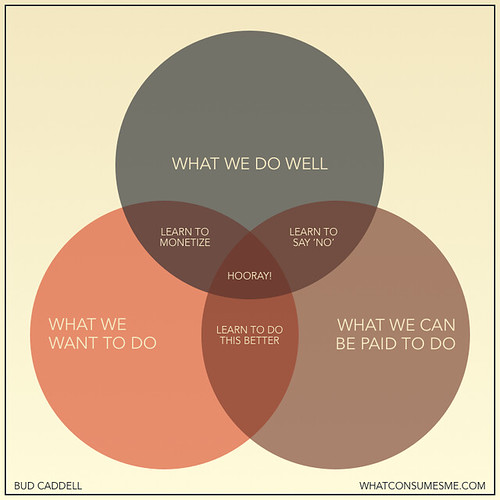
Sometimes people ask me why I went back to school. In terms of this diagram, I wanted to move left from the area labeled, "Learn to say 'No.'"
14 June 2009
LGBTQ
The week before last I spent on two university campuses, separated by a pretty far distance on any spectrum you'd care to name. On both, I was walking through campus with a (different) friend when we saw signs saying "LGBTQ." In both cases, my friend, no stranger to campuses in either case, stopped to wonder what "Q" added to "LGBT."
The answer turns out to be that, while Gays think of themselves as men and Lesbians think of themselves as women, Queers -- in the words of the surprisingly good Wikipedia entry -- deny that gender [sic] is part of the essential self. That is, Queers theory holds that no fact about gender is not socially constructed.
Now, much of sexual identity is socially constructed. Little Victorian boys in both Britain and upper class America ran around in long hair and dresses, which in no way prevented them from conquering the world. Gay men claim that a cornucopia of anonymous sex is the true expression of male sexuality, but I beg to differ. Much of who we are as men and women depends on what society expects us to be.
But that doesn't mean that Queer Theory isn't fundamentally nuts. First, there are differences between men and women beyond the purely biological. For example, while different cultures have different rates of violence, the ratio of violent acts committed by men to those committed by women is surprisingly stable across cultures. Across cultures, young men die at disproportionately high rates when compared to young women -- men take risks that women don't take.
Second, like the academic feminism that birthed it, Queer Theory consigns itself to impotence. Society is so warped by the patriarchy that all that can profitably be done about it is peer reviewed whinging for tenure. We are where we are; we can't go back. Make the best of it.
Third, notice how these peerless thinkers have divorced themselves from mainstream Western history, philosophy, thought and science. They misread Foucault and Derrida by thinking that anything can be treated as text, from our genetic code to what we non-Queer Theorists laughably refer to as the facts on the ground. What more anti-Darwinist idea can there be then that we are really self-defined selves free from constraint? At the same time, what more anti-religious idea can there be?
The answer turns out to be that, while Gays think of themselves as men and Lesbians think of themselves as women, Queers -- in the words of the surprisingly good Wikipedia entry -- deny that gender [sic] is part of the essential self. That is, Queers theory holds that no fact about gender is not socially constructed.
Now, much of sexual identity is socially constructed. Little Victorian boys in both Britain and upper class America ran around in long hair and dresses, which in no way prevented them from conquering the world. Gay men claim that a cornucopia of anonymous sex is the true expression of male sexuality, but I beg to differ. Much of who we are as men and women depends on what society expects us to be.
But that doesn't mean that Queer Theory isn't fundamentally nuts. First, there are differences between men and women beyond the purely biological. For example, while different cultures have different rates of violence, the ratio of violent acts committed by men to those committed by women is surprisingly stable across cultures. Across cultures, young men die at disproportionately high rates when compared to young women -- men take risks that women don't take.
Second, like the academic feminism that birthed it, Queer Theory consigns itself to impotence. Society is so warped by the patriarchy that all that can profitably be done about it is peer reviewed whinging for tenure. We are where we are; we can't go back. Make the best of it.
Third, notice how these peerless thinkers have divorced themselves from mainstream Western history, philosophy, thought and science. They misread Foucault and Derrida by thinking that anything can be treated as text, from our genetic code to what we non-Queer Theorists laughably refer to as the facts on the ground. What more anti-Darwinist idea can there be then that we are really self-defined selves free from constraint? At the same time, what more anti-religious idea can there be?
26 May 2009
Swallow A Camel, Strain At A Gnat
I don't know what to make of the great expense scandal playing itself out in Westminster. For those who aren't following, what I gather is this:
1. Like Congressmen, Members of Parliament are reluctant to vote themselves raises;
2. Like Congressmen, Members of Parliament want to make more money (at least for Congressmen, I think this is less greed than an assumption that everyone should get a raise every year, which explains a lot about the laws they enact);
3. Unlike Congressmen, Members of Parliament arranged to get more money by enacting incredibly generous expense reimbursement policies for themselves, which they were expected and encouraged to take advantage of to the farthest reaches, leading many (most? all?) to collect about 18,000 Pounds per year for things like dredging the moat around their castle;
4. Recently, Britain passed a Freedom of Information Act and now the public knows about the entirely legal expense scam.
So, this is something like the House bank scandal, but with more of a sense of a pox on both your houses, in that all MPs, no matter the party, seem to have participated with both hands.
On the other hand, this is a group that corporately has, over the last few decades, moved quite a bit of regulatory power, authority and responsibility to international bureaucrats in Belgium who never need to answer to the British electorate, so what's really the bigger scandal?
1. Like Congressmen, Members of Parliament are reluctant to vote themselves raises;
2. Like Congressmen, Members of Parliament want to make more money (at least for Congressmen, I think this is less greed than an assumption that everyone should get a raise every year, which explains a lot about the laws they enact);
3. Unlike Congressmen, Members of Parliament arranged to get more money by enacting incredibly generous expense reimbursement policies for themselves, which they were expected and encouraged to take advantage of to the farthest reaches, leading many (most? all?) to collect about 18,000 Pounds per year for things like dredging the moat around their castle;
4. Recently, Britain passed a Freedom of Information Act and now the public knows about the entirely legal expense scam.
So, this is something like the House bank scandal, but with more of a sense of a pox on both your houses, in that all MPs, no matter the party, seem to have participated with both hands.
On the other hand, this is a group that corporately has, over the last few decades, moved quite a bit of regulatory power, authority and responsibility to international bureaucrats in Belgium who never need to answer to the British electorate, so what's really the bigger scandal?
24 May 2009
Do The Boy Scouts Have A Vagina Monologues Merit Badge?
I don't usually blog stories from Instapundit because, seriously, who's going to see it first on the Secret Blog without having first seen it at Instapundit? Not even me, obviously.
But you should make it a point to read this story from insidehighered.com, trying to explain and propose responses to the recent decline of men on college campuses. It seems the problem is socially imposed pressure to perform hegemonic masculinity. The solution is more women's studies courses, so that men will feel free to be themselves rather than, well, men.
Oh, and be gay -- you know you want to.
How any man could resist that program is beyond me.
But you should make it a point to read this story from insidehighered.com, trying to explain and propose responses to the recent decline of men on college campuses. It seems the problem is socially imposed pressure to perform hegemonic masculinity. The solution is more women's studies courses, so that men will feel free to be themselves rather than, well, men.
Oh, and be gay -- you know you want to.
How any man could resist that program is beyond me.
23 May 2009
Let's Commit Philosophy I: The Nature Of Mathematics
This post over at Thought Mesh raises to related philosophical questions that are fun to think about. The first is the nature of mathematics, which I'll discuss in this post, and the second is the nature of science (or the problem with Einstein), which I'll discuss in a post to come.
Alternate universes, the subject of AOG's post, is an example of a set of scientific speculations (time travel is another) that is allowed, but not compelled, by our current models of reality. One question this raises is the reliability of our models, which, in turn, raises the question of the nature of mathematics.
Is mathematics inherently tied to the nature of the universe, or is it just a really good modeling tool that, if done right, has not yet been inaccurate in our experience. Put another way, does putting two objects down next to two other objects have to result in four objects, or does it just so happen to work out that way?
We tend to assume that mathematics is inherently tied to the nature of reality for two reasons. First, as I've already said, because our experience doesn't include an example of where it doesn't. Second, because math has been usefully predictive. (Are these actually two different reasons, or just separate aspects of one reason? It is in any event useful to discuss them separately.)
The first reason seems compelling -- or, rather, feels compelling -- but is obviously problematic. We have, in fact, a rather small sample of different situation in which math has been a useful modeling tool -- those that can be experienced on Earth, with the tools available to us, over the last 10,000 years. How many different types of situations have we really been in, compared to the age and size of the universe. Plus, we're by nature connection seeking, satisficing animals. Once we've experienced an event, the fact that we can go back and show that the math works isn't really all that interesting. We can always find connections after the fact (connection seeking) and once we've found one tend to stop looking (satisficing). So that fact that mathematics conforms to our experience, as we've experienced it, might not be great evidence about the nature of mathematics.
The second reason, because it avoids the problem of looking backwards, seems the stronger. If we can use math to model unknown facts about the universe, and then test to conform them (Popper looks around triumphantly) then it is that much more likely that mathematics is inherently tied to the nature of the universe. But this, too, proves less than it seems. Because we also do make predictions based on mathematics that, when we test them, are disproved -- otherwise, we wouldn't bother to check, would we. In other words, science, in the Popperian sense, requires that we be skeptical that mathematics, or at least our ability to do mathematics, does accurately mirror reality. We don't accept our models until we confirm them.
So it seems that, speaking of Popper, our intuitive sense that mathematics is inherently tied to the nature of reality is unfalsifiable.
Does this matter? Actually, it seems to matter quite a bit. The rocket-sciences who gravitated to Wall Street over the last 15-20 years made billions with models of the financial market used to value options and derivatives without a history of performance or any tangible, real world, analog. The mathematicians and their banks all assumed that their mathematical models were tied to some underlying reality; that the constructs "really" had the value that the models suggested. We know how that turned out.
Now we're about to engage in an even more drastic economic experiment based on the assumption that global climate models can reliably reflect the future, a proposition that, to the extent it can be falsified, has been. Moreover, we not only have to consider whether mathematical models can model future climate, but also whether the people performing the modeling are doing so honestly and competently. Of course, every time you fly, you're also betting your life (albeit with much better evidence) that there is some relationship between mathematics and reality.
Alternate universes, the subject of AOG's post, is an example of a set of scientific speculations (time travel is another) that is allowed, but not compelled, by our current models of reality. One question this raises is the reliability of our models, which, in turn, raises the question of the nature of mathematics.
Is mathematics inherently tied to the nature of the universe, or is it just a really good modeling tool that, if done right, has not yet been inaccurate in our experience. Put another way, does putting two objects down next to two other objects have to result in four objects, or does it just so happen to work out that way?
We tend to assume that mathematics is inherently tied to the nature of reality for two reasons. First, as I've already said, because our experience doesn't include an example of where it doesn't. Second, because math has been usefully predictive. (Are these actually two different reasons, or just separate aspects of one reason? It is in any event useful to discuss them separately.)
The first reason seems compelling -- or, rather, feels compelling -- but is obviously problematic. We have, in fact, a rather small sample of different situation in which math has been a useful modeling tool -- those that can be experienced on Earth, with the tools available to us, over the last 10,000 years. How many different types of situations have we really been in, compared to the age and size of the universe. Plus, we're by nature connection seeking, satisficing animals. Once we've experienced an event, the fact that we can go back and show that the math works isn't really all that interesting. We can always find connections after the fact (connection seeking) and once we've found one tend to stop looking (satisficing). So that fact that mathematics conforms to our experience, as we've experienced it, might not be great evidence about the nature of mathematics.
The second reason, because it avoids the problem of looking backwards, seems the stronger. If we can use math to model unknown facts about the universe, and then test to conform them (Popper looks around triumphantly) then it is that much more likely that mathematics is inherently tied to the nature of the universe. But this, too, proves less than it seems. Because we also do make predictions based on mathematics that, when we test them, are disproved -- otherwise, we wouldn't bother to check, would we. In other words, science, in the Popperian sense, requires that we be skeptical that mathematics, or at least our ability to do mathematics, does accurately mirror reality. We don't accept our models until we confirm them.
So it seems that, speaking of Popper, our intuitive sense that mathematics is inherently tied to the nature of reality is unfalsifiable.
Does this matter? Actually, it seems to matter quite a bit. The rocket-sciences who gravitated to Wall Street over the last 15-20 years made billions with models of the financial market used to value options and derivatives without a history of performance or any tangible, real world, analog. The mathematicians and their banks all assumed that their mathematical models were tied to some underlying reality; that the constructs "really" had the value that the models suggested. We know how that turned out.
Now we're about to engage in an even more drastic economic experiment based on the assumption that global climate models can reliably reflect the future, a proposition that, to the extent it can be falsified, has been. Moreover, we not only have to consider whether mathematical models can model future climate, but also whether the people performing the modeling are doing so honestly and competently. Of course, every time you fly, you're also betting your life (albeit with much better evidence) that there is some relationship between mathematics and reality.
14 May 2009
All Taxes Are Regressive
One point that gets overlooked in all our debates about spending, taxing and borrowing -- and that is particularly germane to the debate over turning our economy upside down because of global warming -- is that we present-day Americans aren't nearly as rich as future Americans. Given that, and given our social consensus in favor of progressive taxation, why do we tax ourselves for their benefit? Aren't all taxes regressive, if time is considered?
It would have been nonsense for the US to have abstained from World War II because it couldn't be paid for out of tax revenue. We benefit, we're better off, it's entirely just that we should pay.
What other costs should we shove off on the future?
It would have been nonsense for the US to have abstained from World War II because it couldn't be paid for out of tax revenue. We benefit, we're better off, it's entirely just that we should pay.
What other costs should we shove off on the future?
07 May 2009
Has Anyone Noticed...
That recently OJ has become the voice of reason at BrothersJudd, while the commenters have gone off the deep end?
(Posting will continue to be light through the end of the semester.)
(Posting will continue to be light through the end of the semester.)
02 April 2009
Now I Have Not Lived In Vain
Trying, today, to come up with the originator of the statement "the act of observing changes the nature of the thing observed" I Googled it.
The result was amusing.
The result was amusing.
10 March 2009
And Your Enemies Closer.
Sometimes I think that the Democratic Party learned everything it needs to know from The Godfather. In particular, I'm thinking about how Obama, like Carter, it stuck in a dynamic where he criticizes only our friends while kowtowing to our enemies. We can see this in Hillary Clinton's bizarre Apology 2009 tour of Asia and Russia (if I were a Clinton conspiracy nut, I'd swear that she purposely had "reset" mistranslated to distract our attention from how stupid the whole "Reset Button" idea was to start with) and the Administration's crawling to Castro and the Taliban (!), while going through that whole "Gordon who?" pantomime.
I understand how, following a series of (to them) logical steps the Democrats can convince themselves that their criticism of our friends is constructive and won't cost. At the same time, they believe that we could have peace in our time if we could only induce our adversaries (who are all, at bottom, rational people just like us who understandably resent our crimes against them) to talk. But why can't they step outside of this dynamic to realize that punishing our friends and rewarding our enemies will tend to make fewer of the former and more of the latter?
I understand how, following a series of (to them) logical steps the Democrats can convince themselves that their criticism of our friends is constructive and won't cost. At the same time, they believe that we could have peace in our time if we could only induce our adversaries (who are all, at bottom, rational people just like us who understandably resent our crimes against them) to talk. But why can't they step outside of this dynamic to realize that punishing our friends and rewarding our enemies will tend to make fewer of the former and more of the latter?
08 March 2009
President Fudd
It's too early to declare the Obama Presidency a disaster, and there is still some justice to the complaint that Obama inherited his problems, but more and more we're seeing why it's a bad idea to elect Senators -- particularly young Senators with zero administrative experience -- president. The White House has completely failed at its most basic responsibility of staffing the new administration. George Bush had two months less than Obama and yet, on Inauguration Day, had a working administration. The other failures of the administration run from the catastrophic -- a commitment to raising taxes in the teeth of a recession -- to the merely incompetent -- the Treasury Secretary's inability to even pretend to know what he's doing -- to the burlesque -- the "reset" button (a stupid idea even if the State Department could speak Russian), giving Gordon Brown zone 1 DVDs, leaking the excuse that the reason Obama blew off Brown was his exhaustion at dealing with the economy.
All in all, it's hard to avoid the conclusion that were seeing Carter redux, bad policies implemented badly. Getting another "great" ex-president is small compensation for having to live through the 70s again, but if I were the Secret Service, I'd be on the look-out for wascally wabbits.
All in all, it's hard to avoid the conclusion that were seeing Carter redux, bad policies implemented badly. Getting another "great" ex-president is small compensation for having to live through the 70s again, but if I were the Secret Service, I'd be on the look-out for wascally wabbits.
25 February 2009
Pavement Panto, Synchronicity And Bounded Rationality
Shortly after reading Brit's brilliant exegesis of the Pavement Panto, I was listening to Dean Martin sing On The Street Where You Live:
Suddenly, Dean was singing his disdain for the Pavement Panto:
Now, obviously this is what we organizational scholars call retrospective sensemaking; the words have meaning for me because of the meaning that I bring to it. All synchronicity -- and all blogging -- is a function of what we notice and what we notice is a function of what's in the front of our brains at any particular moment. We have bounded rationality. From the vast stream of information that's constantly flowing past us we see only those things that we're primed to see. I'll see the pavement panto now that Brit has invented it and hear Dean sing about it only because I know about it. We are each a walking wavefront of experience.
Suddenly, Dean was singing his disdain for the Pavement Panto:
People stop and stare. They don't bother me.
For there's no where else on earth that I would rather be.
Let the time go by, I won't care if I
Can be here on the street where you live.
Now, obviously this is what we organizational scholars call retrospective sensemaking; the words have meaning for me because of the meaning that I bring to it. All synchronicity -- and all blogging -- is a function of what we notice and what we notice is a function of what's in the front of our brains at any particular moment. We have bounded rationality. From the vast stream of information that's constantly flowing past us we see only those things that we're primed to see. I'll see the pavement panto now that Brit has invented it and hear Dean sing about it only because I know about it. We are each a walking wavefront of experience.
20 February 2009

03 February 2009
Terrible News
From OJ comes news that Duck has passed away. I am feeling all the grief that we feel at the unexpected loss of a good friend.
Duck and I met once, IRL, over deli sandwiches in West Springfield, Mass., while he and Skipper were on their cross-country trek. But that is no measure of my regard for Duck.
Looking at that archives at BrothersJudd, I find that we had over 400 conversations on the great issues of the time, and evolution. I cannot easily accommodate myself to the loss of such a valuable sparring partner.
I can find no earlier interaction between us than this comment thread from February 2004. My first comment directed to Duck was:
But I win. I get to believe that Duck's essence continues on, albeit with great surprise.
I see that, as with all eulogies, this is more about me than Duck. But that makes sense, as I resent this death. We do not have so many good men that we can afford to spare one.
Duck and I met once, IRL, over deli sandwiches in West Springfield, Mass., while he and Skipper were on their cross-country trek. But that is no measure of my regard for Duck.
Looking at that archives at BrothersJudd, I find that we had over 400 conversations on the great issues of the time, and evolution. I cannot easily accommodate myself to the loss of such a valuable sparring partner.
I can find no earlier interaction between us than this comment thread from February 2004. My first comment directed to Duck was:
Robert has managed to articulate, as concisely as I've seen, what -- from a purely functional point of view -- I find so dangerous about American atheism: "As far as morality, I am influenced by my family and society, but in the end it is my conscience that has final say. I don't abdicate responsibility for my moral decisions."Not necessarily what I would have chosen to say had I known then what I know now.
In other words, and I think this is a fair summation, "I follow conventional morality, unless I don't like it." I understand that the atheists among us will object that I am trivializing the deeply affecting struggle with their own conscience, in which they draw from their own inner strength, without recourse to false gods, in order to triumph over temptation. They are entirely right -- I am trivializing it.
The reason I spoke of American atheism is that, when combined with our misunderstanding of democracy and classlessness, we quickly decide that we can't be judgmental. Even further, that the fact that some position is consistent with conventional religious morality makes it suspect.
Think about the gay marriage debate from the point of view of any time up to about the year 1997. The establishment Right's position is "Do whatever you want, live together, raise children together, come to what ever contractual arrangement you want; here, have civil union's, just don't call it 'marriage'." The Left's response? "Oh, you vile, oppressive bigots."
The point is that, human beings being what we are, we need an unchanging (well, very slowly changing) arbitrary code of behavior in order to stop us from doing what we want.
But I win. I get to believe that Duck's essence continues on, albeit with great surprise.
I see that, as with all eulogies, this is more about me than Duck. But that makes sense, as I resent this death. We do not have so many good men that we can afford to spare one.
31 January 2009
29 January 2009
It's Not What Bush Did, It's Who He Did It To
From todays Foreign Policy Morning Brief:
The Democrats' proposed $819 billion stimulus package was passed by the U.S. House of Representatives yesterday. Despite last-minute lobbying by President Barack Obama, not a single Republican voted for the package. The bill includes tax breaks, aid to states, and funding for infrastructure improvements, education, Medicaid, and alternative energy projects.Given all the transference and projection that has characterized BDS, it was almost inevitable that one of Obama's first big, signature policy achievements would violate our treaty obligations. Now, we wait for the left to concede that at least Bush was explicit in his repudiation of treaties while Obama is simply brazenly violating "international law."
A controversial "buy-American" provision in the bill would mostly bar foreign steel and iron from the infrastructure projects funded by the stimulus. Critics charge that this provision constitutes protectionism and could violate existing WTO agreements.
Meanwhile, the Senate's version of the bill is nearing $900 billion.
24 January 2009
Haven't Seen Much Discussion
Of the fact that all the ARMs that people were worried about and making fun of as obvious disasters in the making for home owners on a tight budget are resetting lower, saving mortgage-holders a lot of money.
23 January 2009
Might As Well Get It Out Of The Way
So, based on three days experience, it appears that President Obama is going to maintain Bush foreign/military policy while engaging in nationalization and social-engineering at home.
Hmm, military adventures in foreign nations; socialism at home. What discredited 20th century philosophies does that remind us of?
Hmm, military adventures in foreign nations; socialism at home. What discredited 20th century philosophies does that remind us of?
What A Difference A Day Makes
President Obama has asked that trials of inmates at Guantanomo Bay be suspended. The world applauds.
Can you imagine the reaction if President Bush, last week, had asked that the hearings be suspended? I suspect that the response would have been more on the "wiping his feet on the Constitution" side of the ledger.
This sort of thing, along with the "I pledge allegiance to Obama" video that AOG, among others, points us to, are pretty hard to take. I want to give President Obama a fair shot, but that doesn't mean I don't feel the pain of how he is treated compared to W, or that the creepy cult-of-personality stuff isn't worrying.
Can you imagine the reaction if President Bush, last week, had asked that the hearings be suspended? I suspect that the response would have been more on the "wiping his feet on the Constitution" side of the ledger.
This sort of thing, along with the "I pledge allegiance to Obama" video that AOG, among others, points us to, are pretty hard to take. I want to give President Obama a fair shot, but that doesn't mean I don't feel the pain of how he is treated compared to W, or that the creepy cult-of-personality stuff isn't worrying.
21 January 2009
Fortunately, I'm Not Looking For A Good Man
Refusing to have sex on the first date 'increases the chance of finding a good man': Prolonging the mating courtship increases a woman's chance of finding a "good" man, mathematicians have found (Kate Devlin, Telegraph.co.uk, 1/16/09)You've got to love that "prolonging."
Just Americans
I was struck by one portion of President Obama's Inaugural Address that I haven't seen mentioned elsewhere that did something that seems to me important, deliberate and profound:
Of course, if the prototypical American experience is one thing, and the prototypical African-American experience is fundamentally different, then what does that say about the position of African-Americans in America?
It seems to me that in the passage I quoted above, what President Obama is trying to do -- and what only President Obama can do -- is to normalize the black experience as part of the American experience. Whether they chose to do so, the slaves toiled for us. President Obama refers elsewhere in his speech to "our ancestors" and I think that this is part of the same effort.
When people convert to Judaism, it is said that it is as if they are descended from all the Jews who have come before them; they are the inheritors of Israel. American is, of course, the new Israel and we need to recognize, as President Obama wishes us to recognize, that it is as if we are all the inheritors of our American past. We are all the heirs of the slaves and we are all the heirs of the masters. In this way, at least, Obama's inaugural address captures the essence of Lincoln.
In reaffirming the greatness of our nation, we understand that greatness is never a given. It must be earned. Our journey has never been one of short-cuts or settling for less. It has not been the path for the faint-hearted - for those who prefer leisure over work, or seek only the pleasures of riches and fame. Rather, it has been the risk-takers, the doers, the makers of things - some celebrated but more often men and women obscure in their labor, who have carried us up the long, rugged path towards prosperity and freedom.The prototypical American experience is the immigrant experience. We take pride and draw strength from the fact that our fathers and mothers chose to endure unimaginable hardships, including permanent separation from everything and everyone they knew, to come to the United States and build a better life for their children. But if that is the prototypical American experience, it is not the experience of black Americans who did not choose, but were torn from their families and sold across the sea to lives spent as property and with their own children considered to be the property of others.
For us, they packed up their few worldly possessions and traveled across oceans in search of a new life.
For us, they toiled in sweatshops and settled the West; endured the lash of the whip and plowed the hard earth.
For us, they fought and died, in places like Concord and Gettysburg; Normandy and Khe Sahn. Time and again these men and women struggled and sacrificed and worked till their hands were raw so that we might live a better life. They saw America as bigger than the sum of our individual ambitions; greater than all the differences of birth or wealth or faction.
Of course, if the prototypical American experience is one thing, and the prototypical African-American experience is fundamentally different, then what does that say about the position of African-Americans in America?
It seems to me that in the passage I quoted above, what President Obama is trying to do -- and what only President Obama can do -- is to normalize the black experience as part of the American experience. Whether they chose to do so, the slaves toiled for us. President Obama refers elsewhere in his speech to "our ancestors" and I think that this is part of the same effort.
When people convert to Judaism, it is said that it is as if they are descended from all the Jews who have come before them; they are the inheritors of Israel. American is, of course, the new Israel and we need to recognize, as President Obama wishes us to recognize, that it is as if we are all the inheritors of our American past. We are all the heirs of the slaves and we are all the heirs of the masters. In this way, at least, Obama's inaugural address captures the essence of Lincoln.
20 January 2009
As Long As I'm Being Crabby
1. Whose bright idea was it to perform an overly ornate version of a song praising simplicity?
2. In what sense is the following a poem?
2. In what sense is the following a poem?
Each day we go about our business, walking past each other, catching each others' eyes or not, about to speak or speaking. All about us is noise. All about us is noise and bramble, thorn and din, each one of our ancestors on our tongues. Someone is stitching up a hem, darning a hole in a uniform, patching a tire, repairing the things in need of repair.
Someone is trying to make music somewhere with a pair of wooden spoons on an oil drum with cello, boom box, harmonica, voice.
A woman and her son wait for the bus.
A farmer considers the changing sky; A teacher says, "Take out your pencils. Begin."
We encounter each other in words, words spiny or smooth, whispered or declaimed; words to consider, reconsider.
We cross dirt roads and highways that mark the will of someone and then others who said, "I need to see what's on the other side; I know there's something better down the road."
We need to find a place where we are safe; We walk into that which we cannot yet see.
Say it plain, that many have died for this day. Sing the names of the dead who brought us here, who laid the train tracks, raised the bridges, picked the cotton and the lettuce, built brick by brick the glittering edifices they would then keep clean and work inside of.
Praise song for struggle; praise song for the day. Praise song for every hand-lettered sign; The figuring it out at kitchen tables.
Some live by "Love thy neighbor as thy self."
Others by first do no harm, or take no more than you need.
What if the mightiest word is love, love beyond marital, filial, national. Love that casts a widening pool of light. Love with no need to preempt grievance.
In today's sharp sparkle, this winter air, anything can be made, any sentence begun.
On the brink, on the brim, on the cusp -- praise song for walking forward in that light.
Oh, Great
Now we get four years of half the nation's whackadoos arguing that Barack Obama is not really the president because John Roberts screwed up the oath, and the other half screaming that the Chief Justice screwed up the oath on purpose for exactly that reason.
P.S.: At 7:50 pm on January 21, Drudge is flashing that President Obama has been re-sworn by the Chief Justice in the White House.
P.S.: At 7:50 pm on January 21, Drudge is flashing that President Obama has been re-sworn by the Chief Justice in the White House.
15 January 2009
12 January 2009
It's Time For Another Round Of Thoughtful . . . Or Creepy?
The guy in line at the grocery store who had two items, a bouquet of flowers and a large tub of "I can't believe it's not butter."
10 January 2009
Cancer Gene Becomes 100% Fatal: Progress Lauded
Breast cancer gene-free baby born (BBC.com, 1/9/09)
The first baby in the UK tested before conception for a genetic form of breast cancer has been born.
Doctors at University College London said the girl and her mother were doing well following the birth this week.
The embryo was screened for the altered BRCA1 gene, which would have meant the girl had a 80% chance of developing breast cancer.
08 January 2009
The Bomber's Veto
If we believe that:
If so, then Hamas can always torpedo a truce between the Palestinians and the Israelis, at least so long as Arab governments, including the PA, continue to use hatred of the Jews to distract their people from their own failure to secure life, liberty and the pursuit of happiness. If demography is really the Palestinian's friend, then Hamas can win, or at least convince itself that it can win, simply by preventing peace until such time as the Palestinians so greatly outnumber the Israelis that Israel's position becomes untenable. Of course, by preventing peace Hamas also keeps the Palestinians poor, so it's a self-reinforcing cycle.
So what can Israel do? It can decide to simply absorb the rocket attacks. This is, in fact, what it decides periodically, until the burden on its populace becomes too great. Since I think that this is an immoral abrogation of the basic responsibilities of government, I'm less than happy with this tactic.
It can wipe out Hamas. I'm generally skeptical of the "fighting terror only creates martyrs and recruits" argument. Al Qaeda has found that we can make enough martyrs to limit the number of recruits, or at least prevent them from doing anything constructive with the recruits they do get. But the Israelis, who have been calling and texting people living near their targets and telling them to seek shelter, including members of Hamas, are not willing to do what it takes to wipe out a popular movement mixed into a civilian population. This is another indication that, contrary to most people's expectations, the US -- following the Declaration of Independence -- is more ruthless than the Israelis.
The other possible solution is OJ's argument that the Israelis should let Hamas govern, with the expectation that it will fail. This is similar to the Anbar Awakening, in which seeing the future that AQ was trying to bring about up close and personal drove the Sunnis into alliance with us. The problem with this is two-fold. First, Hamas already has some experience delivering social and civil services. Second, whenever Hamas gets in trouble with the people, all it need do is lob a few rockets into Israel, leaving us back where we started.
There is another solution, of course. The federal government owns or managers 86% of the land in Nevada, some 61 million acres. Israel is less than 5.5 million acres. Let them make another desert bloom.
- People are born with certain inalienable rights;
- Among these rights are life, liberty and the pursuit of happiness; and
- People consent to government in order to protect these rights,
If so, then Hamas can always torpedo a truce between the Palestinians and the Israelis, at least so long as Arab governments, including the PA, continue to use hatred of the Jews to distract their people from their own failure to secure life, liberty and the pursuit of happiness. If demography is really the Palestinian's friend, then Hamas can win, or at least convince itself that it can win, simply by preventing peace until such time as the Palestinians so greatly outnumber the Israelis that Israel's position becomes untenable. Of course, by preventing peace Hamas also keeps the Palestinians poor, so it's a self-reinforcing cycle.
So what can Israel do? It can decide to simply absorb the rocket attacks. This is, in fact, what it decides periodically, until the burden on its populace becomes too great. Since I think that this is an immoral abrogation of the basic responsibilities of government, I'm less than happy with this tactic.
It can wipe out Hamas. I'm generally skeptical of the "fighting terror only creates martyrs and recruits" argument. Al Qaeda has found that we can make enough martyrs to limit the number of recruits, or at least prevent them from doing anything constructive with the recruits they do get. But the Israelis, who have been calling and texting people living near their targets and telling them to seek shelter, including members of Hamas, are not willing to do what it takes to wipe out a popular movement mixed into a civilian population. This is another indication that, contrary to most people's expectations, the US -- following the Declaration of Independence -- is more ruthless than the Israelis.
The other possible solution is OJ's argument that the Israelis should let Hamas govern, with the expectation that it will fail. This is similar to the Anbar Awakening, in which seeing the future that AQ was trying to bring about up close and personal drove the Sunnis into alliance with us. The problem with this is two-fold. First, Hamas already has some experience delivering social and civil services. Second, whenever Hamas gets in trouble with the people, all it need do is lob a few rockets into Israel, leaving us back where we started.
There is another solution, of course. The federal government owns or managers 86% of the land in Nevada, some 61 million acres. Israel is less than 5.5 million acres. Let them make another desert bloom.
05 January 2009
Barack Obama, The Perfect President
In one way, Barack Obama might be the perfect president: he was in the Senate, but not of it. He has no reason to feel any institutional loyalty, he wasn't there long enough to be coopted, and I suspect that he understands -- as all reasonably intelligent, reasonably impartial observers must understand -- that the Senate is a ridiculous institution and that Senators are, largely, pompous blowhards who, if they could do anything else, would. Spending any time at all with Joe Biden, who is what passes in the Senate for intelligent and well-informed (he almost certainly knows what century it is), can only underscore that message.
Thus, we see, thanks to OJ, that Obama didn't run his nominee for head of the CIA past Diane Feinstein, and she's now in a snit.
There are certain things that are true of the men who are elected President. One is that they want to be President. Barack Obama, like George W. Bush, doesn't see his allotted role as ushering in the re-animation of congressional governance. He's no more likely to run his nominees past the Senate grandees then George W. Bush, who was lectured by Harry Reid on the necessity of selecting his judicial nominees from a list provided by the Senate.
Does the Senate dare withhold its consent from the Democrat's anointed one? That's the beauty of it: the Senate dares nothing.
Thus, we see, thanks to OJ, that Obama didn't run his nominee for head of the CIA past Diane Feinstein, and she's now in a snit.
There are certain things that are true of the men who are elected President. One is that they want to be President. Barack Obama, like George W. Bush, doesn't see his allotted role as ushering in the re-animation of congressional governance. He's no more likely to run his nominees past the Senate grandees then George W. Bush, who was lectured by Harry Reid on the necessity of selecting his judicial nominees from a list provided by the Senate.
Does the Senate dare withhold its consent from the Democrat's anointed one? That's the beauty of it: the Senate dares nothing.
30 December 2008
Can Google Survive Its Success?
As I understand (admittedly dimly) Google's success is based on an algorithm that does a particularly good job ranking search results based upon how many other web pages link to it. But what happens now that no one finds anything on the web other than through Google? Now Google's algorithm must basically be to rank pages in the order that Google ranks them. I understand that now they're concentrating on getting every web page in the world into their servers multiple times, but that seems like a pretty low-return game.
26 December 2008
Happy Boxing Day
Today is Boxing Day, the day when, um, er, I have no idea (Ma'nish ta'na...).
Is it:
a) The day baby Jesus kicked the Wise Men's asses?
b) The day in England on which the servants are expected to wrap their presents from their masters?
c) A day for organising one's closet? Or,
d) A day in which the English go to "Pantomimes," which they watch from theatre boxes.
Whatever it is, let's all enjoy it. Holidays need no excuses.
Is it:
a) The day baby Jesus kicked the Wise Men's asses?
b) The day in England on which the servants are expected to wrap their presents from their masters?
c) A day for organising one's closet? Or,
d) A day in which the English go to "Pantomimes," which they watch from theatre boxes.
Whatever it is, let's all enjoy it. Holidays need no excuses.


25 December 2008
Christmas Conundrum
Trying to run a hierarchical linear model, I've discovered that my dependent variable, Return on Assets, is leptokurtotic. I can improve it somewhat by running a full model on the raw data, analyzing the residuals and dropping some outliers, but ROA is still leptokurtotic. A logit transform, which is supposed to reduce kurtosis, just makes things worse. It turns out that ROA, which is a very common dependent variable in Strategic Management, is almost always kurtotic because it violates the assumption of proportionality; that is, the relationship between net income and total assets is non-linear.
What is kurtosis? Here's a picture of leptokurtotic data plotted against a normal curve:

What makes it kurtotic is that it is "peakier" than the normal curve. Why should we care? Because the most common statistical methods assume that the residuals of the dependent variable (how far each point is from the predicted value) are normally distributed. If they aren't, then the estimate of how likely it is that a particular result found in a particular sample is chance rather than real is unreliable. Since that's all that statistics do, that's a problem. So, for example, if researchers assume that headaches are distributed normally in the population but they're not, then a treatment that seems effective might not be.
More to the point, some economists think that Long Term Capital Management failed because its models assumed that certain financial measures, like Return on Assets, were normally distributed when they're not. At least one economist has argued that the Black-Scholes option pricing model, which is related to the LTCM model is also wrong for the same reason. Since Black-Scholes and other, related, models are the basis for most modern finance, that implies that people pricing the risk of various financial instruments without much of a history might have assumed that Return on Assets, etc., are normally distributed. Because, contrary to this assumption, ROA is leptokurtotic, the models might have overestimated the expected return on investment, underestimated the risk and mispriced the instruments.
In other words, the fact that ROA is leptokurtotic is a possible explanation, and a more satisfying explanation than most out there, for the sub-prime mortgage and CDS implosion.
What is kurtosis? Here's a picture of leptokurtotic data plotted against a normal curve:

What makes it kurtotic is that it is "peakier" than the normal curve. Why should we care? Because the most common statistical methods assume that the residuals of the dependent variable (how far each point is from the predicted value) are normally distributed. If they aren't, then the estimate of how likely it is that a particular result found in a particular sample is chance rather than real is unreliable. Since that's all that statistics do, that's a problem. So, for example, if researchers assume that headaches are distributed normally in the population but they're not, then a treatment that seems effective might not be.
More to the point, some economists think that Long Term Capital Management failed because its models assumed that certain financial measures, like Return on Assets, were normally distributed when they're not. At least one economist has argued that the Black-Scholes option pricing model, which is related to the LTCM model is also wrong for the same reason. Since Black-Scholes and other, related, models are the basis for most modern finance, that implies that people pricing the risk of various financial instruments without much of a history might have assumed that Return on Assets, etc., are normally distributed. Because, contrary to this assumption, ROA is leptokurtotic, the models might have overestimated the expected return on investment, underestimated the risk and mispriced the instruments.
In other words, the fact that ROA is leptokurtotic is a possible explanation, and a more satisfying explanation than most out there, for the sub-prime mortgage and CDS implosion.
23 December 2008
Recommendations
Of all the different ways of listening to music on the internet, I've listening to Pandora. Basically, you choose a genre, artist or song you like and Pandora picks out features of that song that it looks for in other songs. At the moment, I've just started a "Fred Smith" channel and Pandora is looking for songs that have "folk rock qualities, extensive vamping, acoustic sonority, major key tonality and a breathy male lead vocalist." Well worth suffering through their affectation that they've identified musical DNA.
A Pirate Premium?
Does anyone know why, over the last week or so, the WTI Cushing price for a barrel of oil has started trading at a $5-$10 dollar discount to the other spot markets?
Festivus Comes Early
Via Ann Althouse, I see that the New York Times printed a letter to the editor from the Mayor of Paris lamenting the anti-democratic nature of Caroline Kennedy's possible appointment to the Senate. It reeks, he implies, of American decline.
The letter is a fake.
Now, on to the feats of strength.
The letter is a fake.
Now, on to the feats of strength.
21 December 2008
Timing The Surge
When it does become time to judge George W. Bush's presidency, one big question will concern the timing of the surge. If it could have been done successfully earlier, than it should have been. If it had to wait for AQiM to prove to the Sunnis what vicious idiots they were, then it couldn't have been done much sooner.
19 December 2008
Rick Warren At The Inauguration
First thought: If McCain had won and invited Warren, the progressive left would have told us about how this just proves that Obama would have been so much better.
Second thought: For the left, this is just like how it would have been for the right if McCain had invited Rev. Wright to give the invocation.
Third thought: That's exactly what McCain would have done.
Second thought: For the left, this is just like how it would have been for the right if McCain had invited Rev. Wright to give the invocation.
Third thought: That's exactly what McCain would have done.
What Does Democracy Do?
There are three possible justifications for democracy (including representative democracy):
There's some truth to all of this, but each thesis has different policy implications. If the kindergarten thesis is right -- given the chance, the American people will do the right thing -- then we care about information flow and informed voters. We want to think about things like poll taxes or literacy tests, and we want to force the candidates to make public their specific plans. We care about campaign promises the same way we care about product warranties and fitness for a particular purpose. Parliamentary systems tend to follow this model.
In the Jeffersonian thesis, we're more interested in the people running for office than in what they plan to do. We want exposure to the candidates personality so that we can judge what kind of people they are, rather than their specific plans for specific problems. This is a pretty good positive description of the current system in which we make the candidates spend two years working long hard hours debating, eating corn dogs, giving speeches, going on Letterman, writing (or putting their name to) articles in Foreign Affairs, etc.
In the black box model, all we need as a decision. We don't have to know or care how that decision was arrived at. Random works fine, so long as all the actors agree to be bound by the decision. the black box thesis doesn't have much to say about the campaign, but it loves the Electoral College in which even a random and ambiguous close vote is translated into a clear win.
I find, as I get older, that I become more attracted to the black box thesis. Given that we need to have a president, for example, and that he needs to be the clear winner, an election is as good a way to choose him as any and better than most. At that point, retrospective sense making and our psychological need to see ourselves in control of our fate will kick in and we'll all agree that he is the legitimate leader, chosen by the Jeffersonian electorate. (And, if push comes to shove, G-d won't let anything too bad happen to us.)
(We can also add the Bismark corollary, which says that it doesn't really matter how we choose our leaders because G-d's going to take care of us anyway, but I assume that it's obvious why the less we talk about that, the better.)
- The people, corporately, make good decisions (which I'll call the "kindergarten thesis");
- Election to office lends legitimacy from the sovereign people to our temporary leaders (the "Jeffersonian theis"); or
- We need to get our leaders somewhere and voting beats accident of birth or force of arms (the "black box thesis").
There's some truth to all of this, but each thesis has different policy implications. If the kindergarten thesis is right -- given the chance, the American people will do the right thing -- then we care about information flow and informed voters. We want to think about things like poll taxes or literacy tests, and we want to force the candidates to make public their specific plans. We care about campaign promises the same way we care about product warranties and fitness for a particular purpose. Parliamentary systems tend to follow this model.
In the Jeffersonian thesis, we're more interested in the people running for office than in what they plan to do. We want exposure to the candidates personality so that we can judge what kind of people they are, rather than their specific plans for specific problems. This is a pretty good positive description of the current system in which we make the candidates spend two years working long hard hours debating, eating corn dogs, giving speeches, going on Letterman, writing (or putting their name to) articles in Foreign Affairs, etc.
In the black box model, all we need as a decision. We don't have to know or care how that decision was arrived at. Random works fine, so long as all the actors agree to be bound by the decision. the black box thesis doesn't have much to say about the campaign, but it loves the Electoral College in which even a random and ambiguous close vote is translated into a clear win.
I find, as I get older, that I become more attracted to the black box thesis. Given that we need to have a president, for example, and that he needs to be the clear winner, an election is as good a way to choose him as any and better than most. At that point, retrospective sense making and our psychological need to see ourselves in control of our fate will kick in and we'll all agree that he is the legitimate leader, chosen by the Jeffersonian electorate. (And, if push comes to shove, G-d won't let anything too bad happen to us.)
18 December 2008
And You Think We Have Problems
This has got to be the weirdest comment thread I've ever read, including on Screw Loose Change.
No Logic Please, We're American
OJ points us to an article arguing that the Europeans hate us because of our freedoms. Of course, the terrorists hate us because of our freedoms, too. So, as we all suspected, Europeans are terrorists.
14 December 2008
"So what if a guy threw his shoe at me,"
George W. Bush is, in the end, probably not a great president. He is a little too dismissive of the bully pulpit to qualify as great, a characteristic failing of his family. Supposedly, his grandmother once complained that George H.W. Bush was talking about himself too much in one of his campaigns and this reticence, odd in a family that gave us two presidents, seems to have affected W. as well. It is also, I suspect, partly how Laura likes it and partly an entirely laudable effort not to be Bill Clinton.
He has been, however, the perfect president for me. For better or worse, if I were designing a president, I'd end up with George W. Bush. And I for one will dearly miss a president who's reaction to having a shoe thrown at him is "So what?"
He has been, however, the perfect president for me. For better or worse, if I were designing a president, I'd end up with George W. Bush. And I for one will dearly miss a president who's reaction to having a shoe thrown at him is "So what?"
12 December 2008
Today's "Don't We Know Too Much About Each Other For Strangers" Quiz
James Lileks points us to a mystery cartoon that uses the phrase "A drug on the market."
Name the only other context in which I've heard this phrase.
Well, I guess I don't know you people as well as I thought:
Name the only other context in which I've heard this phrase.
Well, I guess I don't know you people as well as I thought:
At another table a very well-dressed WOMAN talks to a MOOR. She has a bracelet on her wrist. No other jewelry.Casablanca, 1942.WOMAN
But can't you make it just a little more? Please.
MOOR
I'm sorry, Madam, but diamonds are a drug on the market. Everybody sells diamonds. There are diamonds everywhere. Two thousand, four hundred.
WOMAN
All right.
11 December 2008
What's Really Disturbing About This:
This is becoming a terrible week for the US newspaper industry. On Monday, the Tribune Company, which owns the Chicago Tribune and the Los Angeles Times, filed for bankruptcy. The New York Times Company followed by saying it might mortgage its Renzo Piano-designed headquarters building by Times Square to reduce debt.is that it's from the Financial Times. It is, of course, from an article about the importance of the rock-solid reporting we get from The New York Times, the Wall Street Journal and the Financial Times.
There Are Only Three Successful Arguments In American Politics
1. God wants us to do this.
2. It's for the children.
3. This might lead to war.
(I would link to the Daily Duck piece that got me going down this track, but I can't reach the Daily Duck at the moment.)
2. It's for the children.
3. This might lead to war.
(I would link to the Daily Duck piece that got me going down this track, but I can't reach the Daily Duck at the moment.)
09 December 2008
A Conundrum
One months ago, the yield on the 5-year Treasury note was 2.51%. Today the yield is 1.61%. Over the same period, the price of a Credit Default Swap for the 5-year Treasury, basically insurance against the Treasury not paying off, has risen to $60 per $10,000 insured from $35.70, an increase of 68%. (A year ago, the cost was $8.00 per $10,000.) In other words, the risk has gone up while the yield has gone down. Generally, so much money is flooding into Treasuries that short-term notes are trading at essentially 0, and some have a negative real yield (that is, the interest paid is less than inflation). Anyone want to offer an explanation?
06 December 2008
Peter Responds
With the, ur, "short" version. Hey, I report, you decide:
1) With 38% of the popular vote, Harper wins a strong minority government in October in a field of five parties, four of a leftist bent. He is twelve seats short of a majority. He wins his first confidence motion, but then clumsily issues a budget statement with controversial budget cuts including one that will reduce the funding base of the other parties. Harper has a lot of strengths, but overt petulant partisanship is his Achilles Heel.
2) Completely out of the blue, the three opposition parties (the Greens won no seats), including the separatist-in-principle-but-we-promise-not-until-some-vague-future-date-we-need-not-specify-now Bloc Quebecois that has never been included in government in any way, announce a Liberal/NDP (socialist)coalition with promised Bloc support that moves non-confidence and announces it is ready to govern when the Cons are defeated. They then argue that the Governor-General, the royal representative, is constitutionally obliged to invite them to form a government and refuse Harper's request for an election because we just had one. They are all broke from the last election and only the Tories are in good financial health. Several constitutional experts, who finally get their fifteen minutes of fame after spending many lonely years mastering arcane legal/historical stuff nobody gives a crap about, agree. Pandemonium, because there are only days to the motion. Harper, who controls the parliamentary agenda, adjourns it for a week to Dec 8th.
3) The week is crazy and increasingly very disturbing because the rhetoric moves to overheat and everybody is nakedly partisan at a time the country wants steady-as-she-goes leadership. It becomes apparent the coalition was in the works long before the budget statement. Harper offers to backtrack on the most controversial items, but there is no stopping them now. Trouble is, the Liberal leader is an unpopular wimp who blew the election and resigned a few days later, effective a leadership convention next May that already has several declared candidates out campaigning, so who will the new PM be? It has to be a Liberal because they have by far the most seats, but they have no credible leader. Internal uncertainty and tensions about that surface until it is decided he will anyway, which does the coalition no good at all in popular support;
4) The big issue seems to be whether the GG, who rushes home from a diplomatic sojourn in Europe, will grant the election it is presumed Harper will ask for because it looks like he might cream the leaderless Libs. Never in my life have so many Canadians learned so much about the fabled royal perogative. Brit will know all about this, but basically the Crown does what the Government requests and advises 99.99999% of the time. However, there are theoretical reserve powers to act independantly if Parliament is being subverted or in times of crisis;
5) Then it starts to become clear Harper will not wait for the vote, but will instead ask the GG to prorogue Parliament (formally ending the session which requires royal assent, as opposed to just adjourning for a few weeks which the House decides itself by majority vote) before so everybody can take a Valium until late January. Same wild debate as to whether she is compelled to agree just weeks after the last election and with a theoretical alternative government to call on. Constitutional experts get a second fifteen minutes of fame. The coalition screams about subverting democracy and governing as a dictator, yada, yada. It first looks like Harper's move is a cowardly dealing from the bottom of the deck, but as everybody starts to get alarmed by the turmoil and alternatives, support for it grows because the alternatives (coalition government or another election) are both so unpopular. Everybody, including me, starts thinking: "This is neither fun nor funny anymore."
6) It would take too long to explain, but the mess is terribly divisive and divides the country badly, both politically and regionally. Pundits work 24/7. Disgust for politicians and the process spikes. The public wants cooperation and statesmanship has other things on their minds like keeping their jobs. The coalition really hasn't got its act together because they hate and distrust one another personally as much as they hate the Tories publically.
7) Thursday the GG grants the request to prorogue and the air rushes out of the balloon. National polls start to show strong anti-coalition feeling and Harper's support soars except in Quebec and show he would sweep to a majority. Uh-oh, nice play, Shakespeare. Dissension in the ranks of the left emerge and many say the coalition won't last. If just 12 of the opposition M.P.'s refuse to vote or vote with the Tories, it's game, set, match to Harper, and a few start questionning it publically. Leftist blogs start infighting about the disaster, which of course is all blamed on Tory lies and spin. The coalition starts to descend into buffoonery, such as failing to get the tape of it's leader's address to the nation to TV feed stations in Ottawa in time for specially scheduled national statements. A delicious, much-quoted quip from a radio talk show is that is looks like "Arrogance vs. The Three Stooges".
So, the country is going to take a break for a nice Christmas dinner and nobody has a clue about January. Harper is the clear winner but only in the relative context of an overall bilious disgust with politicians.
Finger-pointing all around, but we of the post-Judd Alliance all know that the real reason for this incredibly risky failed gambit is that conservative governments are offences against progress and the Enlightenment, if not history itself.
David: Actually, I'll put it down to what a bad idea Parliamentary government is.
1) With 38% of the popular vote, Harper wins a strong minority government in October in a field of five parties, four of a leftist bent. He is twelve seats short of a majority. He wins his first confidence motion, but then clumsily issues a budget statement with controversial budget cuts including one that will reduce the funding base of the other parties. Harper has a lot of strengths, but overt petulant partisanship is his Achilles Heel.
2) Completely out of the blue, the three opposition parties (the Greens won no seats), including the separatist-in-principle-but-we-promise-not-until-some-vague-future-date-we-need-not-specify-now Bloc Quebecois that has never been included in government in any way, announce a Liberal/NDP (socialist)coalition with promised Bloc support that moves non-confidence and announces it is ready to govern when the Cons are defeated. They then argue that the Governor-General, the royal representative, is constitutionally obliged to invite them to form a government and refuse Harper's request for an election because we just had one. They are all broke from the last election and only the Tories are in good financial health. Several constitutional experts, who finally get their fifteen minutes of fame after spending many lonely years mastering arcane legal/historical stuff nobody gives a crap about, agree. Pandemonium, because there are only days to the motion. Harper, who controls the parliamentary agenda, adjourns it for a week to Dec 8th.
3) The week is crazy and increasingly very disturbing because the rhetoric moves to overheat and everybody is nakedly partisan at a time the country wants steady-as-she-goes leadership. It becomes apparent the coalition was in the works long before the budget statement. Harper offers to backtrack on the most controversial items, but there is no stopping them now. Trouble is, the Liberal leader is an unpopular wimp who blew the election and resigned a few days later, effective a leadership convention next May that already has several declared candidates out campaigning, so who will the new PM be? It has to be a Liberal because they have by far the most seats, but they have no credible leader. Internal uncertainty and tensions about that surface until it is decided he will anyway, which does the coalition no good at all in popular support;
4) The big issue seems to be whether the GG, who rushes home from a diplomatic sojourn in Europe, will grant the election it is presumed Harper will ask for because it looks like he might cream the leaderless Libs. Never in my life have so many Canadians learned so much about the fabled royal perogative. Brit will know all about this, but basically the Crown does what the Government requests and advises 99.99999% of the time. However, there are theoretical reserve powers to act independantly if Parliament is being subverted or in times of crisis;
5) Then it starts to become clear Harper will not wait for the vote, but will instead ask the GG to prorogue Parliament (formally ending the session which requires royal assent, as opposed to just adjourning for a few weeks which the House decides itself by majority vote) before so everybody can take a Valium until late January. Same wild debate as to whether she is compelled to agree just weeks after the last election and with a theoretical alternative government to call on. Constitutional experts get a second fifteen minutes of fame. The coalition screams about subverting democracy and governing as a dictator, yada, yada. It first looks like Harper's move is a cowardly dealing from the bottom of the deck, but as everybody starts to get alarmed by the turmoil and alternatives, support for it grows because the alternatives (coalition government or another election) are both so unpopular. Everybody, including me, starts thinking: "This is neither fun nor funny anymore."
6) It would take too long to explain, but the mess is terribly divisive and divides the country badly, both politically and regionally. Pundits work 24/7. Disgust for politicians and the process spikes. The public wants cooperation and statesmanship has other things on their minds like keeping their jobs. The coalition really hasn't got its act together because they hate and distrust one another personally as much as they hate the Tories publically.
7) Thursday the GG grants the request to prorogue and the air rushes out of the balloon. National polls start to show strong anti-coalition feeling and Harper's support soars except in Quebec and show he would sweep to a majority. Uh-oh, nice play, Shakespeare. Dissension in the ranks of the left emerge and many say the coalition won't last. If just 12 of the opposition M.P.'s refuse to vote or vote with the Tories, it's game, set, match to Harper, and a few start questionning it publically. Leftist blogs start infighting about the disaster, which of course is all blamed on Tory lies and spin. The coalition starts to descend into buffoonery, such as failing to get the tape of it's leader's address to the nation to TV feed stations in Ottawa in time for specially scheduled national statements. A delicious, much-quoted quip from a radio talk show is that is looks like "Arrogance vs. The Three Stooges".
So, the country is going to take a break for a nice Christmas dinner and nobody has a clue about January. Harper is the clear winner but only in the relative context of an overall bilious disgust with politicians.
Finger-pointing all around, but we of the post-Judd Alliance all know that the real reason for this incredibly risky failed gambit is that conservative governments are offences against progress and the Enlightenment, if not history itself.
David: Actually, I'll put it down to what a bad idea Parliamentary government is.
02 December 2008
27 November 2008
We Were There First
Just wanted to point everyone to the new blog Secular Right, which features entirely different people having all our same old arguments. You'll all be glad to see that we do it better.
Happy Thanksgiving
It's nice to have one day a year in which we notice all of our blessings: family, friends, complete strangers we meet on the Internet, freedom from hunger, from want, from tyranny and from oppression.
Tomorrow is soon enough to complain about how the world is going to Hell and no one has ever had it as bad as we do.
Finally, thanks to all of you for doing that voodoo that you do so well.
As Brit reminds me, we should all remember to give thanks for the greatest blog thread ever.
Tomorrow is soon enough to complain about how the world is going to Hell and no one has ever had it as bad as we do.
Finally, thanks to all of you for doing that voodoo that you do so well.
As Brit reminds me, we should all remember to give thanks for the greatest blog thread ever.
25 November 2008
The Two Basic Questions Of Organization Science
1. Why do organizations look so similar?
2. Why do organizations look so different?
2. Why do organizations look so different?
24 November 2008
But, Seriously ...
What exactly is the justification for making Hillary Secretary of State? All the commentary I've read has been about the domestic politics of it all, but what exactly is Obama going to say to justify turning State over to Hillary? Does she have any relevant experience? Was he not paying attention during the whole Bullets in Bosnia fiasco? Remember when she went to the UN conference on the year of the woman and, um, er, did ... something, maybe?
11 November 2008
A Proof Of The Existence Of God
1. The concept "God" exists.
2. "Perfection" is an inseparable part of the conception of "God."
3. "Perfection" is that state of being that cannot be bettered.
4. A God that exists is better than a God that does not exist.
Therefore, God must exist.
(This is, of course, St. Anselm's ontological proof of the existence of God. All complaints should be directed to him.)
2. "Perfection" is an inseparable part of the conception of "God."
3. "Perfection" is that state of being that cannot be bettered.
4. A God that exists is better than a God that does not exist.
Therefore, God must exist.
(This is, of course, St. Anselm's ontological proof of the existence of God. All complaints should be directed to him.)
10 November 2008
Six Degrees Of Me
1. I used to comment at BrothersJuddblog so obsessively that OJ asked me to blog.
2. While blogging at BrothersJudd, I "met" Brit, who commented at BrothersJudd. Ultimately, Brit and I, throwing caution and commonsense to the wind, actually met in real life over drinks at a pub.
3. Brit introduced me to Bryan Appleyard's blog, which I read for a while but stopped reading when it became clear that it was a hotbed of anti-American propaganda. Brit commented so obsessively that Bryan asked him to substitute blogging while Bryan was away. While substitute blogging, Brit bemoaned the death of lunchtime drinking.
4. Andrew Sullivan linked to Brit's post, and did some moaning of his own.
5. Ann Althouse made fun of Andrew for being nostalgic for rampant alcoholism.
6. I often read Ann Althouse's blog, saw her post, linked through to Andrew Sullivan and saw his link to Brit.
Clearly, I invented the Internet.
2. While blogging at BrothersJudd, I "met" Brit, who commented at BrothersJudd. Ultimately, Brit and I, throwing caution and commonsense to the wind, actually met in real life over drinks at a pub.
3. Brit introduced me to Bryan Appleyard's blog, which I read for a while but stopped reading when it became clear that it was a hotbed of anti-American propaganda. Brit commented so obsessively that Bryan asked him to substitute blogging while Bryan was away. While substitute blogging, Brit bemoaned the death of lunchtime drinking.
4. Andrew Sullivan linked to Brit's post, and did some moaning of his own.
5. Ann Althouse made fun of Andrew for being nostalgic for rampant alcoholism.
6. I often read Ann Althouse's blog, saw her post, linked through to Andrew Sullivan and saw his link to Brit.
Clearly, I invented the Internet.
07 November 2008
He's Just Crazy Enough To Do It.
Palin calls attacks 'cruel' and 'cowardly' (CNN, 11/07/08)
Alaska Gov. Sarah Palin called former aides of Sen. John McCain "jerks" for circulating unflattering stories about her since the Republican ticket lost its bid for the White House Tuesday.The McCain aides spreading stories about Gov. Palin apparently missed this point of this scene from Blazing Saddles. How can anything bad they say about the Gov. not reflect worse on Senator McCain, who was, after all, singly responsible for choosing her as his running mate?
Hoisted
One of the things about the Obama campaign that really struck me was the extent to which his supporters assumed that he was lying. On a series of issues, people supported him even though his professed position on important policy matters didn't jibe with theirs. "Well," they would say patronizingly when called on this, "you don't understand. He has to say that to get elected." This is a really fascinating way to deal with cognitive dissonance.
The best example of this, because it is the example on which Obama wavered least, is gay marriage. Obama does not support gay marriage because, as a Christian, he believes that God mandated that marriage be between a man and a woman.
Well, I don't know what anyone "really" believes. I only know what they say and what presidential candidates say makes a difference. Obama won California and so did Proposition 8, and the two things probably aren't unconnected. According to exit polls, blacks and Latinos were 28% of the electorate and both voted for Proposition 8, blacks by better than two to one (70% yes, 30% no). The census bureau estimated that blacks were only 6.7% of the California population in 2006 while Hispanics are 36%. Clearly Proposition 8 wouldn't have passed without black and Latino votes.
The best example of this, because it is the example on which Obama wavered least, is gay marriage. Obama does not support gay marriage because, as a Christian, he believes that God mandated that marriage be between a man and a woman.
"I'm a Christian, and so although I try not to have my religious beliefs dominate or determine my political views on this issue, I do believe that tradition and my religious beliefs say that marriage is something sanctified between a man and a woman," Obama said.Nonetheless, liberals and the left assume that he can't really believe this but is only saying it to avoid alienating voters.
Well, I don't know what anyone "really" believes. I only know what they say and what presidential candidates say makes a difference. Obama won California and so did Proposition 8, and the two things probably aren't unconnected. According to exit polls, blacks and Latinos were 28% of the electorate and both voted for Proposition 8, blacks by better than two to one (70% yes, 30% no). The census bureau estimated that blacks were only 6.7% of the California population in 2006 while Hispanics are 36%. Clearly Proposition 8 wouldn't have passed without black and Latino votes.
Subscribe to:
Posts (Atom)