Over at the Daily Duck, a discussion of minimum wage laws slopped over into a discussion of CEO compensation because ... because ... well, it just did. Harry complained that CEOs are overpaid and I responded that, given sales and revenues, American CEOs are modestly paid. I offered to look at particular companies and see if their CEO compensation was high, or modest. Harry suggested looking at Duke Power, Bank of America and Four Seasons Hotels.
Before we get to that, though, I though that it might be useful to look at the role of the CEO and why CEOs are well-paid. The problem is that we -- and by "we," I mean people who study organizations -- don't really know, because we don't really know what CEOs do.
My own area of org. studies is Strategic Management, which expressly tries to determine why some firms outperform other firms. This is a relatively new area of study -- Strategy dates back to about 1980 -- but we do know some things. We know that the overall economy plays a large role in organizational performance and that the industry firms are in plays an even larger role. So, right away, we know of two important factors in organizational performance where CEOs, seemingly, can't make much of a difference.
There are at least two strands of Strategy, the deterministic school, that say, more or less, that the particulars of the individual firm have almost nothing to do with performance. The Industrial Organization school (representated by Michael Porter and pushed most energetically at Harvard) basically says that, over time, firm performance is a function of five industry level forces: competition, suppliers, customers, new entrants and substitutes. Over the long run, all the firms in an industry will earn the same return and look the same. Strategy is limited to industry level actions, like trying to get the government to prohibit new entrants into the industry. In this world, having one CEO or another doesn't make much difference.
The other deterministic school are the Pop Ecologists (most notably, Hannan & Freeman (1977), if you want to Google them), who basically apply biologically derived population rules to organizations. Again, performance results from the environment, rather than from any choice the firm makes.
I tend to believe, however, that strategic choice (Childs, 1972) does make a difference, and there is some good research to back me up. Although the research confirms that industry level and business level effects are important, they also show that corporate level effects made a difference. The best of these studies (Misangyi, et al, 2006) found that differences between businesses accounted for about 37% of observed variation in performance, while industry and corporate effects both accounted for about 14% of observed variation. (Although it might not be obvious, this is also how we know that related diversification, particularly if the related businesses can share a valuable, unique corporate resource, makes more sense than unrelated diversification. It's pretty clear that the returns from one business do not say anything about the expected returns from another co-owned business in an unrelated industry).
If corporate differences explain about 14% of the difference in returns, then we might think that choosing one CEO over another could only effect a portion of that 14%. I'd argue, though, that the CEO in a large, complex business -- and the businesses Harry suggested we look at are all large and complex -- is somewhat more influential than that. The CEO, after all, is ultimately responsible for deciding what industries the corporation will compete in (acquisitions and divestitures are decisions classically made by the CEO personally). Thus, the industry level effects are, in part, attributable to the CEO. Similarly, the CEO is ultimately responsible for steering corporate resources to one business or another, so the CEO is also responsible, in part, for the business level variation in performance.
On the other hand, the compensation question isn't really, how important is having a CEO to corporate performance. The question is, how important is having this CEO instead of some random, but lower paid, CEO. In other words, how much better is performance because the organization has this CEO and is it worth paying him a lot of money to keep him.
That's a question we can't answer (although my own research, which I'm going to be presenting to the Academy of Management next Monday, suggests that new CEOs reduce organizational returns for about 2 years after they take office because they just can't stop themselves from fiddling with things that aren't broken). There is a fairly large subset of Strategy that argues that the top-management team is the most important determiner of strategy, and thus performance (Hambrick & Mason, 1984). That research has looked at demographic characteristics of the CEO and TMT and has found consistent statistically significant effects on performance. Those effects, however, have been pretty small, explaining about 1% of the observed variance across organizations (Certo, et al 2006). Since we don't know which CEO characteristics, if any, really make a difference, and because organizations are reluctant to change CEOs as part of an academic experiment, we can't really say how much difference CEOs make.
Furthermore, it's not clear that the market has any better idea of what goes into making a good CEO. In fact, it's pretty clear that the market for CEOs is not efficient. The small number of CEOs hired every year, along with the opportunities for opportunism, ensure that (Arrow, 1974; Williamson, 1975). Given that the relationship between CEO identity and performance is, at best, causally ambiguous, it seems clear that the CEO (e.g., Steve Jobs, Jack Welch) can be a unique strategic resource that allows for above-average returns while other CEOs can have neutral or even negative effects on performance. This sort of small number, highly opportunistic, causally ambiguous, high transaction cost issue is exactly where we would expect the market not to function well and, in fact, we don't see companies bidding to pay a market-clearing price for CEOs. Rather, we'd expect to see what we do see, a bureaucratic, path-dependent, authoritarian mechanism for hiring and compensating CEOs. (This is also why government regulation won't make any difference; we already have a regulatory approach and no reason to think the government would do it any differently.)
Having said all that, let's look at the three companies Harry suggested (which I'll probably do over time, since I'm incredibly busy getting ready from the AOM and then comps).
1. Duke Energy.
Duke Energy's 2009 Proxy Statement is here and includes, starting on page 22, a really excellent discussion of its executive compensation policy. This is, in fact, an odd choice for Harry to have made, because this is a state-of-the-art compensation policy that touches all the right bases. It also includes, starting on page 39, a separate discussion of the CEO's compensation. In 2008, it shows that the CEO, James Rogers, received a salary of, um, $0. He received a bonus of $0. Duke Energy has decided to base their CEO compensation entirely on long-term results by giving him various forms of stock grants that he's not allowed to sell for several years after receipt. Based on various objective and subjective factors, the compensation committee awarded him about 80% of the shares he could theoretically have received had Duke exceeded all of its goals. This included a 5% stock bonus due to the fact that no work-related employee or contractor fatalities in 2008, which strikes me as an astonishing achievement for a utility company. All in all, Mr. Rogers received stock worth about $5.5 million, none of which he could sell for years. His pension increased in value by $300,000, which Duke counts towards compensation but I probably wouldn't. He received other compensation worth almost $525,000 (health insurance, flying on the company planes, etc.) for total compensation worth $6.3 million. Duke Energy's sales in 2008 were $13 billion and net revenue was $1.3 billion. Paying the CEO $5.5 million in stock he can't sell strikes me as perfectly reasonable and certainly not outrageous. Also, I can't emphasize enough how impressive the report by the compensation committee is; this is gold-plated corporate governance.
Still to come, Bank of America and the Four Seasons.
06 August 2009


17 July 2009
10 July 2009
Do You Know What Would Really Boost Food Output?
INSTANT VIEW-G8 summit pledges $20 bln to boost food output (Reuters, 7/10/09)
Following are comments from aid experts on the G8 summit's global food security initiative, which pledged $20 billion over three years to spur agricultural investment in poorer countries to fight hunger.Higher temperatures and increased atmospheric CO2. Best of all, they're free.
STAFFAN DE MISTURA, VICE EXECUTIVE DIRECTOR, WORLD FOOD PROGRAMME
"$20 billion was a last-minute agreement and it was greeted with great happiness by all of us in the conference room. While we are rebuilding agriculture we need to continue supporting food assistance because the financial crisis is pushing another 103 million people into hunger this year."
Unfair Moments In Photo Journalism

Sarkozy: A thing of beauty is a joy forever.
Obama: Yeah, baby. Yeah.
04 July 2009

26 June 2009
Serendipity
Sri Lanka astrologer is arrested (BBC.com, June 26, 2009)
In any event, as Mr. Banadara is discovering, in cultures that believe in the power of astrology, astrologers have power.
The authorities in Sri Lanka have arrested a popular astrologer who predicted that the president will be ejected from office, police say.We've been having a desultory conversation over at Think of England about why, personally and as a society, we tolerate charlatans. I tried to suggest, perhaps too obliquely, that Brit was more bothered than Peter and I because Brit thinks that his particular belief system, rational empiricism, is True and Right and Better than the belief systems of women who purchase silver bracelets to improve their chances of getting pregnant and of the charlatans who sell them. Rational empiricism, especially as practiced by the Brits of the world, has its advantages, G-d knows, but it has its disadvantages, too.
Chandrasiri Bandara announced last week that the government would flounder in September and October because of political and economic problems.
The opposition have condemned the arrest and warned that the country is heading towards a dictatorship.
Astrology is taken seriously by numerous Sri Lankan politicians.
In any event, as Mr. Banadara is discovering, in cultures that believe in the power of astrology, astrologers have power.
25 June 2009

23 June 2009
The Terribly Attractive Terrible Idea
It occurs to me that, in my Intro to Law course next semester, I should burn a copy of the Constitution while denouncing it as a pact with the Devil (as, of course, it is). I would also make clear that, simultaneously, the Constitution is the pinnacle of human intellectual achievement and that the two characteristics are intimately related.
22 June 2009
What To Spend On Grandma?
So, I've been brushing up on my healthcare policy in preparation for the debates about Obama Care. I'm agin it, I'm just trying to figure out why.
My best guess right now is that one reason I'm against it is that it's going to have to ration care to deal with the last 6 months problem. About half of all life-cycle health spending comes in the last 6 months of life. An aging population that, more and more, doesn't die young just makes the problem bigger: young people tend to die quickly and cheaply, old people die slowly and expensively. On the one hand, this is likely to be a nice case of giving the people what the ask for, good and hard. People who hate those heartless, profit-making HMOs are going to love the cuddly and benevolent government when it tells them they've lived long enough; "Here, have some nice morphine."
In any event, in doing my research, I stumbled across this nice .pdf of a presentation on long-term health care spending (at the rate we're going, every dollar of gdp will be spend on health care in 2082) by Peter Orszag, who, in 2007, was director of the CBO. This presentation has lots of nice information in it, but I was particularly struck by this slide showing not much correlation between per capita healthcare spending an quality of care:

Now, I don't want to rest too heavily on this graphic. I don't know how quality of care was defined, and it's possible that hard cases are shipped to hospitals in high spending areas, but this chart is certainly suggestive. Combined with another slide in the presentation showing that, in 1975, 33% of personal health care expenditures were paid out of pocket while today only about 15% are paid out of pocket, we start to see a way out of the "health care crisis," which is really a "paying for health care crisis."
My best guess right now is that one reason I'm against it is that it's going to have to ration care to deal with the last 6 months problem. About half of all life-cycle health spending comes in the last 6 months of life. An aging population that, more and more, doesn't die young just makes the problem bigger: young people tend to die quickly and cheaply, old people die slowly and expensively. On the one hand, this is likely to be a nice case of giving the people what the ask for, good and hard. People who hate those heartless, profit-making HMOs are going to love the cuddly and benevolent government when it tells them they've lived long enough; "Here, have some nice morphine."
In any event, in doing my research, I stumbled across this nice .pdf of a presentation on long-term health care spending (at the rate we're going, every dollar of gdp will be spend on health care in 2082) by Peter Orszag, who, in 2007, was director of the CBO. This presentation has lots of nice information in it, but I was particularly struck by this slide showing not much correlation between per capita healthcare spending an quality of care:

Now, I don't want to rest too heavily on this graphic. I don't know how quality of care was defined, and it's possible that hard cases are shipped to hospitals in high spending areas, but this chart is certainly suggestive. Combined with another slide in the presentation showing that, in 1975, 33% of personal health care expenditures were paid out of pocket while today only about 15% are paid out of pocket, we start to see a way out of the "health care crisis," which is really a "paying for health care crisis."
19 June 2009
PETI?
Apparently, PETA is mad at President Obama for swatting a fly. But what business is it of PETAs, given that flies are not animals. Another example of mission creep. (Of course, I'm really just in it for the title.)
16 June 2009
A Picture...
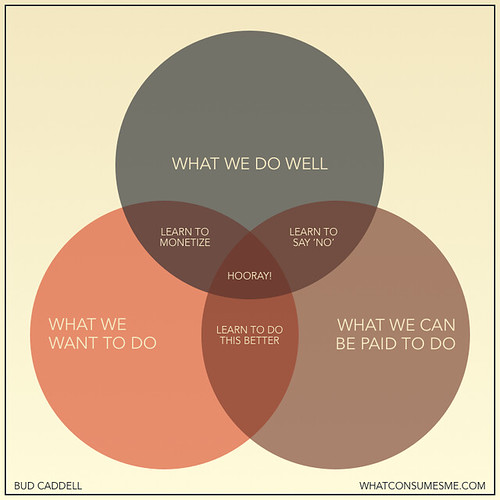
Sometimes people ask me why I went back to school. In terms of this diagram, I wanted to move left from the area labeled, "Learn to say 'No.'"
14 June 2009
LGBTQ
The week before last I spent on two university campuses, separated by a pretty far distance on any spectrum you'd care to name. On both, I was walking through campus with a (different) friend when we saw signs saying "LGBTQ." In both cases, my friend, no stranger to campuses in either case, stopped to wonder what "Q" added to "LGBT."
The answer turns out to be that, while Gays think of themselves as men and Lesbians think of themselves as women, Queers -- in the words of the surprisingly good Wikipedia entry -- deny that gender [sic] is part of the essential self. That is, Queers theory holds that no fact about gender is not socially constructed.
Now, much of sexual identity is socially constructed. Little Victorian boys in both Britain and upper class America ran around in long hair and dresses, which in no way prevented them from conquering the world. Gay men claim that a cornucopia of anonymous sex is the true expression of male sexuality, but I beg to differ. Much of who we are as men and women depends on what society expects us to be.
But that doesn't mean that Queer Theory isn't fundamentally nuts. First, there are differences between men and women beyond the purely biological. For example, while different cultures have different rates of violence, the ratio of violent acts committed by men to those committed by women is surprisingly stable across cultures. Across cultures, young men die at disproportionately high rates when compared to young women -- men take risks that women don't take.
Second, like the academic feminism that birthed it, Queer Theory consigns itself to impotence. Society is so warped by the patriarchy that all that can profitably be done about it is peer reviewed whinging for tenure. We are where we are; we can't go back. Make the best of it.
Third, notice how these peerless thinkers have divorced themselves from mainstream Western history, philosophy, thought and science. They misread Foucault and Derrida by thinking that anything can be treated as text, from our genetic code to what we non-Queer Theorists laughably refer to as the facts on the ground. What more anti-Darwinist idea can there be then that we are really self-defined selves free from constraint? At the same time, what more anti-religious idea can there be?
The answer turns out to be that, while Gays think of themselves as men and Lesbians think of themselves as women, Queers -- in the words of the surprisingly good Wikipedia entry -- deny that gender [sic] is part of the essential self. That is, Queers theory holds that no fact about gender is not socially constructed.
Now, much of sexual identity is socially constructed. Little Victorian boys in both Britain and upper class America ran around in long hair and dresses, which in no way prevented them from conquering the world. Gay men claim that a cornucopia of anonymous sex is the true expression of male sexuality, but I beg to differ. Much of who we are as men and women depends on what society expects us to be.

But that doesn't mean that Queer Theory isn't fundamentally nuts. First, there are differences between men and women beyond the purely biological. For example, while different cultures have different rates of violence, the ratio of violent acts committed by men to those committed by women is surprisingly stable across cultures. Across cultures, young men die at disproportionately high rates when compared to young women -- men take risks that women don't take.
Second, like the academic feminism that birthed it, Queer Theory consigns itself to impotence. Society is so warped by the patriarchy that all that can profitably be done about it is peer reviewed whinging for tenure. We are where we are; we can't go back. Make the best of it.
Third, notice how these peerless thinkers have divorced themselves from mainstream Western history, philosophy, thought and science. They misread Foucault and Derrida by thinking that anything can be treated as text, from our genetic code to what we non-Queer Theorists laughably refer to as the facts on the ground. What more anti-Darwinist idea can there be then that we are really self-defined selves free from constraint? At the same time, what more anti-religious idea can there be?
26 May 2009
Swallow A Camel, Strain At A Gnat
I don't know what to make of the great expense scandal playing itself out in Westminster. For those who aren't following, what I gather is this:
1. Like Congressmen, Members of Parliament are reluctant to vote themselves raises;
2. Like Congressmen, Members of Parliament want to make more money (at least for Congressmen, I think this is less greed than an assumption that everyone should get a raise every year, which explains a lot about the laws they enact);
3. Unlike Congressmen, Members of Parliament arranged to get more money by enacting incredibly generous expense reimbursement policies for themselves, which they were expected and encouraged to take advantage of to the farthest reaches, leading many (most? all?) to collect about 18,000 Pounds per year for things like dredging the moat around their castle;
4. Recently, Britain passed a Freedom of Information Act and now the public knows about the entirely legal expense scam.
So, this is something like the House bank scandal, but with more of a sense of a pox on both your houses, in that all MPs, no matter the party, seem to have participated with both hands.
On the other hand, this is a group that corporately has, over the last few decades, moved quite a bit of regulatory power, authority and responsibility to international bureaucrats in Belgium who never need to answer to the British electorate, so what's really the bigger scandal?
1. Like Congressmen, Members of Parliament are reluctant to vote themselves raises;
2. Like Congressmen, Members of Parliament want to make more money (at least for Congressmen, I think this is less greed than an assumption that everyone should get a raise every year, which explains a lot about the laws they enact);
3. Unlike Congressmen, Members of Parliament arranged to get more money by enacting incredibly generous expense reimbursement policies for themselves, which they were expected and encouraged to take advantage of to the farthest reaches, leading many (most? all?) to collect about 18,000 Pounds per year for things like dredging the moat around their castle;
4. Recently, Britain passed a Freedom of Information Act and now the public knows about the entirely legal expense scam.
So, this is something like the House bank scandal, but with more of a sense of a pox on both your houses, in that all MPs, no matter the party, seem to have participated with both hands.
On the other hand, this is a group that corporately has, over the last few decades, moved quite a bit of regulatory power, authority and responsibility to international bureaucrats in Belgium who never need to answer to the British electorate, so what's really the bigger scandal?
24 May 2009
Do The Boy Scouts Have A Vagina Monologues Merit Badge?
I don't usually blog stories from Instapundit because, seriously, who's going to see it first on the Secret Blog without having first seen it at Instapundit? Not even me, obviously.
But you should make it a point to read this story from insidehighered.com, trying to explain and propose responses to the recent decline of men on college campuses. It seems the problem is socially imposed pressure to perform hegemonic masculinity. The solution is more women's studies courses, so that men will feel free to be themselves rather than, well, men.
Oh, and be gay -- you know you want to.
How any man could resist that program is beyond me.
But you should make it a point to read this story from insidehighered.com, trying to explain and propose responses to the recent decline of men on college campuses. It seems the problem is socially imposed pressure to perform hegemonic masculinity. The solution is more women's studies courses, so that men will feel free to be themselves rather than, well, men.
Oh, and be gay -- you know you want to.
How any man could resist that program is beyond me.
23 May 2009
Let's Commit Philosophy I: The Nature Of Mathematics
This post over at Thought Mesh raises to related philosophical questions that are fun to think about. The first is the nature of mathematics, which I'll discuss in this post, and the second is the nature of science (or the problem with Einstein), which I'll discuss in a post to come.
Alternate universes, the subject of AOG's post, is an example of a set of scientific speculations (time travel is another) that is allowed, but not compelled, by our current models of reality. One question this raises is the reliability of our models, which, in turn, raises the question of the nature of mathematics.
Is mathematics inherently tied to the nature of the universe, or is it just a really good modeling tool that, if done right, has not yet been inaccurate in our experience. Put another way, does putting two objects down next to two other objects have to result in four objects, or does it just so happen to work out that way?
We tend to assume that mathematics is inherently tied to the nature of reality for two reasons. First, as I've already said, because our experience doesn't include an example of where it doesn't. Second, because math has been usefully predictive. (Are these actually two different reasons, or just separate aspects of one reason? It is in any event useful to discuss them separately.)
The first reason seems compelling -- or, rather, feels compelling -- but is obviously problematic. We have, in fact, a rather small sample of different situation in which math has been a useful modeling tool -- those that can be experienced on Earth, with the tools available to us, over the last 10,000 years. How many different types of situations have we really been in, compared to the age and size of the universe. Plus, we're by nature connection seeking, satisficing animals. Once we've experienced an event, the fact that we can go back and show that the math works isn't really all that interesting. We can always find connections after the fact (connection seeking) and once we've found one tend to stop looking (satisficing). So that fact that mathematics conforms to our experience, as we've experienced it, might not be great evidence about the nature of mathematics.
The second reason, because it avoids the problem of looking backwards, seems the stronger. If we can use math to model unknown facts about the universe, and then test to conform them (Popper looks around triumphantly) then it is that much more likely that mathematics is inherently tied to the nature of the universe. But this, too, proves less than it seems. Because we also do make predictions based on mathematics that, when we test them, are disproved -- otherwise, we wouldn't bother to check, would we. In other words, science, in the Popperian sense, requires that we be skeptical that mathematics, or at least our ability to do mathematics, does accurately mirror reality. We don't accept our models until we confirm them.
So it seems that, speaking of Popper, our intuitive sense that mathematics is inherently tied to the nature of reality is unfalsifiable.
Does this matter? Actually, it seems to matter quite a bit. The rocket-sciences who gravitated to Wall Street over the last 15-20 years made billions with models of the financial market used to value options and derivatives without a history of performance or any tangible, real world, analog. The mathematicians and their banks all assumed that their mathematical models were tied to some underlying reality; that the constructs "really" had the value that the models suggested. We know how that turned out.
Now we're about to engage in an even more drastic economic experiment based on the assumption that global climate models can reliably reflect the future, a proposition that, to the extent it can be falsified, has been. Moreover, we not only have to consider whether mathematical models can model future climate, but also whether the people performing the modeling are doing so honestly and competently. Of course, every time you fly, you're also betting your life (albeit with much better evidence) that there is some relationship between mathematics and reality.
Alternate universes, the subject of AOG's post, is an example of a set of scientific speculations (time travel is another) that is allowed, but not compelled, by our current models of reality. One question this raises is the reliability of our models, which, in turn, raises the question of the nature of mathematics.
Is mathematics inherently tied to the nature of the universe, or is it just a really good modeling tool that, if done right, has not yet been inaccurate in our experience. Put another way, does putting two objects down next to two other objects have to result in four objects, or does it just so happen to work out that way?
We tend to assume that mathematics is inherently tied to the nature of reality for two reasons. First, as I've already said, because our experience doesn't include an example of where it doesn't. Second, because math has been usefully predictive. (Are these actually two different reasons, or just separate aspects of one reason? It is in any event useful to discuss them separately.)
The first reason seems compelling -- or, rather, feels compelling -- but is obviously problematic. We have, in fact, a rather small sample of different situation in which math has been a useful modeling tool -- those that can be experienced on Earth, with the tools available to us, over the last 10,000 years. How many different types of situations have we really been in, compared to the age and size of the universe. Plus, we're by nature connection seeking, satisficing animals. Once we've experienced an event, the fact that we can go back and show that the math works isn't really all that interesting. We can always find connections after the fact (connection seeking) and once we've found one tend to stop looking (satisficing). So that fact that mathematics conforms to our experience, as we've experienced it, might not be great evidence about the nature of mathematics.
The second reason, because it avoids the problem of looking backwards, seems the stronger. If we can use math to model unknown facts about the universe, and then test to conform them (Popper looks around triumphantly) then it is that much more likely that mathematics is inherently tied to the nature of the universe. But this, too, proves less than it seems. Because we also do make predictions based on mathematics that, when we test them, are disproved -- otherwise, we wouldn't bother to check, would we. In other words, science, in the Popperian sense, requires that we be skeptical that mathematics, or at least our ability to do mathematics, does accurately mirror reality. We don't accept our models until we confirm them.
So it seems that, speaking of Popper, our intuitive sense that mathematics is inherently tied to the nature of reality is unfalsifiable.
Does this matter? Actually, it seems to matter quite a bit. The rocket-sciences who gravitated to Wall Street over the last 15-20 years made billions with models of the financial market used to value options and derivatives without a history of performance or any tangible, real world, analog. The mathematicians and their banks all assumed that their mathematical models were tied to some underlying reality; that the constructs "really" had the value that the models suggested. We know how that turned out.
Now we're about to engage in an even more drastic economic experiment based on the assumption that global climate models can reliably reflect the future, a proposition that, to the extent it can be falsified, has been. Moreover, we not only have to consider whether mathematical models can model future climate, but also whether the people performing the modeling are doing so honestly and competently. Of course, every time you fly, you're also betting your life (albeit with much better evidence) that there is some relationship between mathematics and reality.
14 May 2009
All Taxes Are Regressive
One point that gets overlooked in all our debates about spending, taxing and borrowing -- and that is particularly germane to the debate over turning our economy upside down because of global warming -- is that we present-day Americans aren't nearly as rich as future Americans. Given that, and given our social consensus in favor of progressive taxation, why do we tax ourselves for their benefit? Aren't all taxes regressive, if time is considered?
It would have been nonsense for the US to have abstained from World War II because it couldn't be paid for out of tax revenue. We benefit, we're better off, it's entirely just that we should pay.
What other costs should we shove off on the future?
It would have been nonsense for the US to have abstained from World War II because it couldn't be paid for out of tax revenue. We benefit, we're better off, it's entirely just that we should pay.
What other costs should we shove off on the future?
07 May 2009
Has Anyone Noticed...
That recently OJ has become the voice of reason at BrothersJudd, while the commenters have gone off the deep end?
(Posting will continue to be light through the end of the semester.)
(Posting will continue to be light through the end of the semester.)
02 April 2009
Now I Have Not Lived In Vain
Trying, today, to come up with the originator of the statement "the act of observing changes the nature of the thing observed" I Googled it.
The result was amusing.
The result was amusing.
Subscribe to:
Posts (Atom)