Following are comments from aid experts on the G8 summit's global food security initiative, which pledged $20 billion over three years to spur agricultural investment in poorer countries to fight hunger.Higher temperatures and increased atmospheric CO2. Best of all, they're free.
STAFFAN DE MISTURA, VICE EXECUTIVE DIRECTOR, WORLD FOOD PROGRAMME
"$20 billion was a last-minute agreement and it was greeted with great happiness by all of us in the conference room. While we are rebuilding agriculture we need to continue supporting food assistance because the financial crisis is pushing another 103 million people into hunger this year."
10 July 2009
Do You Know What Would Really Boost Food Output?
INSTANT VIEW-G8 summit pledges $20 bln to boost food output (Reuters, 7/10/09)


Unfair Moments In Photo Journalism

Sarkozy: A thing of beauty is a joy forever.
Obama: Yeah, baby. Yeah.
04 July 2009

26 June 2009
Serendipity
Sri Lanka astrologer is arrested (BBC.com, June 26, 2009)
In any event, as Mr. Banadara is discovering, in cultures that believe in the power of astrology, astrologers have power.
The authorities in Sri Lanka have arrested a popular astrologer who predicted that the president will be ejected from office, police say.We've been having a desultory conversation over at Think of England about why, personally and as a society, we tolerate charlatans. I tried to suggest, perhaps too obliquely, that Brit was more bothered than Peter and I because Brit thinks that his particular belief system, rational empiricism, is True and Right and Better than the belief systems of women who purchase silver bracelets to improve their chances of getting pregnant and of the charlatans who sell them. Rational empiricism, especially as practiced by the Brits of the world, has its advantages, G-d knows, but it has its disadvantages, too.
Chandrasiri Bandara announced last week that the government would flounder in September and October because of political and economic problems.
The opposition have condemned the arrest and warned that the country is heading towards a dictatorship.
Astrology is taken seriously by numerous Sri Lankan politicians.
In any event, as Mr. Banadara is discovering, in cultures that believe in the power of astrology, astrologers have power.
25 June 2009

23 June 2009
The Terribly Attractive Terrible Idea
It occurs to me that, in my Intro to Law course next semester, I should burn a copy of the Constitution while denouncing it as a pact with the Devil (as, of course, it is). I would also make clear that, simultaneously, the Constitution is the pinnacle of human intellectual achievement and that the two characteristics are intimately related.
22 June 2009
What To Spend On Grandma?
So, I've been brushing up on my healthcare policy in preparation for the debates about Obama Care. I'm agin it, I'm just trying to figure out why.
My best guess right now is that one reason I'm against it is that it's going to have to ration care to deal with the last 6 months problem. About half of all life-cycle health spending comes in the last 6 months of life. An aging population that, more and more, doesn't die young just makes the problem bigger: young people tend to die quickly and cheaply, old people die slowly and expensively. On the one hand, this is likely to be a nice case of giving the people what the ask for, good and hard. People who hate those heartless, profit-making HMOs are going to love the cuddly and benevolent government when it tells them they've lived long enough; "Here, have some nice morphine."
In any event, in doing my research, I stumbled across this nice .pdf of a presentation on long-term health care spending (at the rate we're going, every dollar of gdp will be spend on health care in 2082) by Peter Orszag, who, in 2007, was director of the CBO. This presentation has lots of nice information in it, but I was particularly struck by this slide showing not much correlation between per capita healthcare spending an quality of care:

Now, I don't want to rest too heavily on this graphic. I don't know how quality of care was defined, and it's possible that hard cases are shipped to hospitals in high spending areas, but this chart is certainly suggestive. Combined with another slide in the presentation showing that, in 1975, 33% of personal health care expenditures were paid out of pocket while today only about 15% are paid out of pocket, we start to see a way out of the "health care crisis," which is really a "paying for health care crisis."
19 June 2009
PETI?
Apparently, PETA is mad at President Obama for swatting a fly. But what business is it of PETAs, given that flies are not animals. Another example of mission creep. (Of course, I'm really just in it for the title.)
16 June 2009
A Picture...
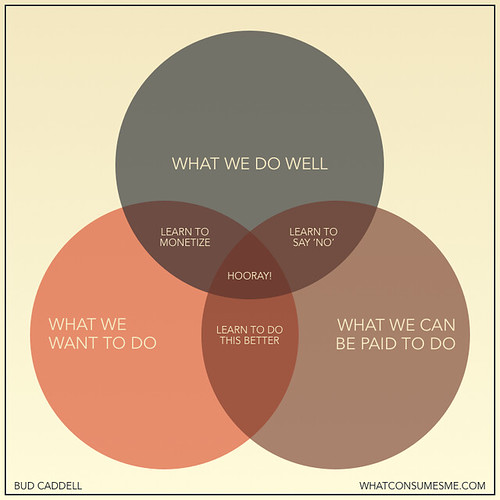
Sometimes people ask me why I went back to school. In terms of this diagram, I wanted to move left from the area labeled, "Learn to say 'No.'"
14 June 2009
LGBTQ
The week before last I spent on two university campuses, separated by a pretty far distance on any spectrum you'd care to name. On both, I was walking through campus with a (different) friend when we saw signs saying "LGBTQ." In both cases, my friend, no stranger to campuses in either case, stopped to wonder what "Q" added to "LGBT."
The answer turns out to be that, while Gays think of themselves as men and Lesbians think of themselves as women, Queers -- in the words of the surprisingly good Wikipedia entry -- deny that gender [sic] is part of the essential self. That is, Queers theory holds that no fact about gender is not socially constructed.
Now, much of sexual identity is socially constructed. Little Victorian boys in both Britain and upper class America ran around in long hair and dresses, which in no way prevented them from conquering the world. Gay men claim that a cornucopia of anonymous sex is the true expression of male sexuality, but I beg to differ. Much of who we are as men and women depends on what society expects us to be.
But that doesn't mean that Queer Theory isn't fundamentally nuts. First, there are differences between men and women beyond the purely biological. For example, while different cultures have different rates of violence, the ratio of violent acts committed by men to those committed by women is surprisingly stable across cultures. Across cultures, young men die at disproportionately high rates when compared to young women -- men take risks that women don't take.
Second, like the academic feminism that birthed it, Queer Theory consigns itself to impotence. Society is so warped by the patriarchy that all that can profitably be done about it is peer reviewed whinging for tenure. We are where we are; we can't go back. Make the best of it.
Third, notice how these peerless thinkers have divorced themselves from mainstream Western history, philosophy, thought and science. They misread Foucault and Derrida by thinking that anything can be treated as text, from our genetic code to what we non-Queer Theorists laughably refer to as the facts on the ground. What more anti-Darwinist idea can there be then that we are really self-defined selves free from constraint? At the same time, what more anti-religious idea can there be?
The answer turns out to be that, while Gays think of themselves as men and Lesbians think of themselves as women, Queers -- in the words of the surprisingly good Wikipedia entry -- deny that gender [sic] is part of the essential self. That is, Queers theory holds that no fact about gender is not socially constructed.
Now, much of sexual identity is socially constructed. Little Victorian boys in both Britain and upper class America ran around in long hair and dresses, which in no way prevented them from conquering the world. Gay men claim that a cornucopia of anonymous sex is the true expression of male sexuality, but I beg to differ. Much of who we are as men and women depends on what society expects us to be.

But that doesn't mean that Queer Theory isn't fundamentally nuts. First, there are differences between men and women beyond the purely biological. For example, while different cultures have different rates of violence, the ratio of violent acts committed by men to those committed by women is surprisingly stable across cultures. Across cultures, young men die at disproportionately high rates when compared to young women -- men take risks that women don't take.
Second, like the academic feminism that birthed it, Queer Theory consigns itself to impotence. Society is so warped by the patriarchy that all that can profitably be done about it is peer reviewed whinging for tenure. We are where we are; we can't go back. Make the best of it.
Third, notice how these peerless thinkers have divorced themselves from mainstream Western history, philosophy, thought and science. They misread Foucault and Derrida by thinking that anything can be treated as text, from our genetic code to what we non-Queer Theorists laughably refer to as the facts on the ground. What more anti-Darwinist idea can there be then that we are really self-defined selves free from constraint? At the same time, what more anti-religious idea can there be?
26 May 2009
Swallow A Camel, Strain At A Gnat
I don't know what to make of the great expense scandal playing itself out in Westminster. For those who aren't following, what I gather is this:
1. Like Congressmen, Members of Parliament are reluctant to vote themselves raises;
2. Like Congressmen, Members of Parliament want to make more money (at least for Congressmen, I think this is less greed than an assumption that everyone should get a raise every year, which explains a lot about the laws they enact);
3. Unlike Congressmen, Members of Parliament arranged to get more money by enacting incredibly generous expense reimbursement policies for themselves, which they were expected and encouraged to take advantage of to the farthest reaches, leading many (most? all?) to collect about 18,000 Pounds per year for things like dredging the moat around their castle;
4. Recently, Britain passed a Freedom of Information Act and now the public knows about the entirely legal expense scam.
So, this is something like the House bank scandal, but with more of a sense of a pox on both your houses, in that all MPs, no matter the party, seem to have participated with both hands.
On the other hand, this is a group that corporately has, over the last few decades, moved quite a bit of regulatory power, authority and responsibility to international bureaucrats in Belgium who never need to answer to the British electorate, so what's really the bigger scandal?
24 May 2009
Do The Boy Scouts Have A Vagina Monologues Merit Badge?
I don't usually blog stories from Instapundit because, seriously, who's going to see it first on the Secret Blog without having first seen it at Instapundit? Not even me, obviously.
But you should make it a point to read this story from insidehighered.com, trying to explain and propose responses to the recent decline of men on college campuses. It seems the problem is socially imposed pressure to perform hegemonic masculinity. The solution is more women's studies courses, so that men will feel free to be themselves rather than, well, men.
Oh, and be gay -- you know you want to.
How any man could resist that program is beyond me.
23 May 2009
Let's Commit Philosophy I: The Nature Of Mathematics
This post over at Thought Mesh raises to related philosophical questions that are fun to think about. The first is the nature of mathematics, which I'll discuss in this post, and the second is the nature of science (or the problem with Einstein), which I'll discuss in a post to come.
Alternate universes, the subject of AOG's post, is an example of a set of scientific speculations (time travel is another) that is allowed, but not compelled, by our current models of reality. One question this raises is the reliability of our models, which, in turn, raises the question of the nature of mathematics.
Is mathematics inherently tied to the nature of the universe, or is it just a really good modeling tool that, if done right, has not yet been inaccurate in our experience. Put another way, does putting two objects down next to two other objects have to result in four objects, or does it just so happen to work out that way?
We tend to assume that mathematics is inherently tied to the nature of reality for two reasons. First, as I've already said, because our experience doesn't include an example of where it doesn't. Second, because math has been usefully predictive. (Are these actually two different reasons, or just separate aspects of one reason? It is in any event useful to discuss them separately.)
The first reason seems compelling -- or, rather, feels compelling -- but is obviously problematic. We have, in fact, a rather small sample of different situation in which math has been a useful modeling tool -- those that can be experienced on Earth, with the tools available to us, over the last 10,000 years. How many different types of situations have we really been in, compared to the age and size of the universe. Plus, we're by nature connection seeking, satisficing animals. Once we've experienced an event, the fact that we can go back and show that the math works isn't really all that interesting. We can always find connections after the fact (connection seeking) and once we've found one tend to stop looking (satisficing). So that fact that mathematics conforms to our experience, as we've experienced it, might not be great evidence about the nature of mathematics.
The second reason, because it avoids the problem of looking backwards, seems the stronger. If we can use math to model unknown facts about the universe, and then test to conform them (Popper looks around triumphantly) then it is that much more likely that mathematics is inherently tied to the nature of the universe. But this, too, proves less than it seems. Because we also do make predictions based on mathematics that, when we test them, are disproved -- otherwise, we wouldn't bother to check, would we. In other words, science, in the Popperian sense, requires that we be skeptical that mathematics, or at least our ability to do mathematics, does accurately mirror reality. We don't accept our models until we confirm them.
So it seems that, speaking of Popper, our intuitive sense that mathematics is inherently tied to the nature of reality is unfalsifiable.
Does this matter? Actually, it seems to matter quite a bit. The rocket-sciences who gravitated to Wall Street over the last 15-20 years made billions with models of the financial market used to value options and derivatives without a history of performance or any tangible, real world, analog. The mathematicians and their banks all assumed that their mathematical models were tied to some underlying reality; that the constructs "really" had the value that the models suggested. We know how that turned out.
Now we're about to engage in an even more drastic economic experiment based on the assumption that global climate models can reliably reflect the future, a proposition that, to the extent it can be falsified, has been. Moreover, we not only have to consider whether mathematical models can model future climate, but also whether the people performing the modeling are doing so honestly and competently. Of course, every time you fly, you're also betting your life (albeit with much better evidence) that there is some relationship between mathematics and reality.
14 May 2009
All Taxes Are Regressive
One point that gets overlooked in all our debates about spending, taxing and borrowing -- and that is particularly germane to the debate over turning our economy upside down because of global warming -- is that we present-day Americans aren't nearly as rich as future Americans. Given that, and given our social consensus in favor of progressive taxation, why do we tax ourselves for their benefit? Aren't all taxes regressive, if time is considered?
It would have been nonsense for the US to have abstained from World War II because it couldn't be paid for out of tax revenue. We benefit, we're better off, it's entirely just that we should pay.
What other costs should we shove off on the future?
It would have been nonsense for the US to have abstained from World War II because it couldn't be paid for out of tax revenue. We benefit, we're better off, it's entirely just that we should pay.
What other costs should we shove off on the future?
07 May 2009
Has Anyone Noticed...
That recently OJ has become the voice of reason at BrothersJudd, while the commenters have gone off the deep end?
(Posting will continue to be light through the end of the semester.)
(Posting will continue to be light through the end of the semester.)
02 April 2009
Now I Have Not Lived In Vain
Trying, today, to come up with the originator of the statement "the act of observing changes the nature of the thing observed" I Googled it.
The result was amusing.
The result was amusing.
10 March 2009
And Your Enemies Closer.
Sometimes I think that the Democratic Party learned everything it needs to know from The Godfather. In particular, I'm thinking about how Obama, like Carter, it stuck in a dynamic where he criticizes only our friends while kowtowing to our enemies. We can see this in Hillary Clinton's bizarre Apology 2009 tour of Asia and Russia (if I were a Clinton conspiracy nut, I'd swear that she purposely had "reset" mistranslated to distract our attention from how stupid the whole "Reset Button" idea was to start with) and the Administration's crawling to Castro and the Taliban (!), while going through that whole "Gordon who?" pantomime.
I understand how, following a series of (to them) logical steps the Democrats can convince themselves that their criticism of our friends is constructive and won't cost. At the same time, they believe that we could have peace in our time if we could only induce our adversaries (who are all, at bottom, rational people just like us who understandably resent our crimes against them) to talk. But why can't they step outside of this dynamic to realize that punishing our friends and rewarding our enemies will tend to make fewer of the former and more of the latter?
I understand how, following a series of (to them) logical steps the Democrats can convince themselves that their criticism of our friends is constructive and won't cost. At the same time, they believe that we could have peace in our time if we could only induce our adversaries (who are all, at bottom, rational people just like us who understandably resent our crimes against them) to talk. But why can't they step outside of this dynamic to realize that punishing our friends and rewarding our enemies will tend to make fewer of the former and more of the latter?
08 March 2009
President Fudd
It's too early to declare the Obama Presidency a disaster, and there is still some justice to the complaint that Obama inherited his problems, but more and more we're seeing why it's a bad idea to elect Senators -- particularly young Senators with zero administrative experience -- president. The White House has completely failed at its most basic responsibility of staffing the new administration. George Bush had two months less than Obama and yet, on Inauguration Day, had a working administration. The other failures of the administration run from the catastrophic -- a commitment to raising taxes in the teeth of a recession -- to the merely incompetent -- the Treasury Secretary's inability to even pretend to know what he's doing -- to the burlesque -- the "reset" button (a stupid idea even if the State Department could speak Russian), giving Gordon Brown zone 1 DVDs, leaking the excuse that the reason Obama blew off Brown was his exhaustion at dealing with the economy.
All in all, it's hard to avoid the conclusion that were seeing Carter redux, bad policies implemented badly. Getting another "great" ex-president is small compensation for having to live through the 70s again, but if I were the Secret Service, I'd be on the look-out for wascally wabbits.
All in all, it's hard to avoid the conclusion that were seeing Carter redux, bad policies implemented badly. Getting another "great" ex-president is small compensation for having to live through the 70s again, but if I were the Secret Service, I'd be on the look-out for wascally wabbits.
Subscribe to:
Posts (Atom)